Spatial Choreography Gives Large Stages Purpose in GCC & Middle East
A large stage creates opportunity, but it also creates a problem.
There is more space to fill.
Performers can move farther. Scenic structures can become larger. Screens can stretch across the room. Lighting can reach into multiple levels and directions.
Yet scale alone does not make a performance feel powerful.
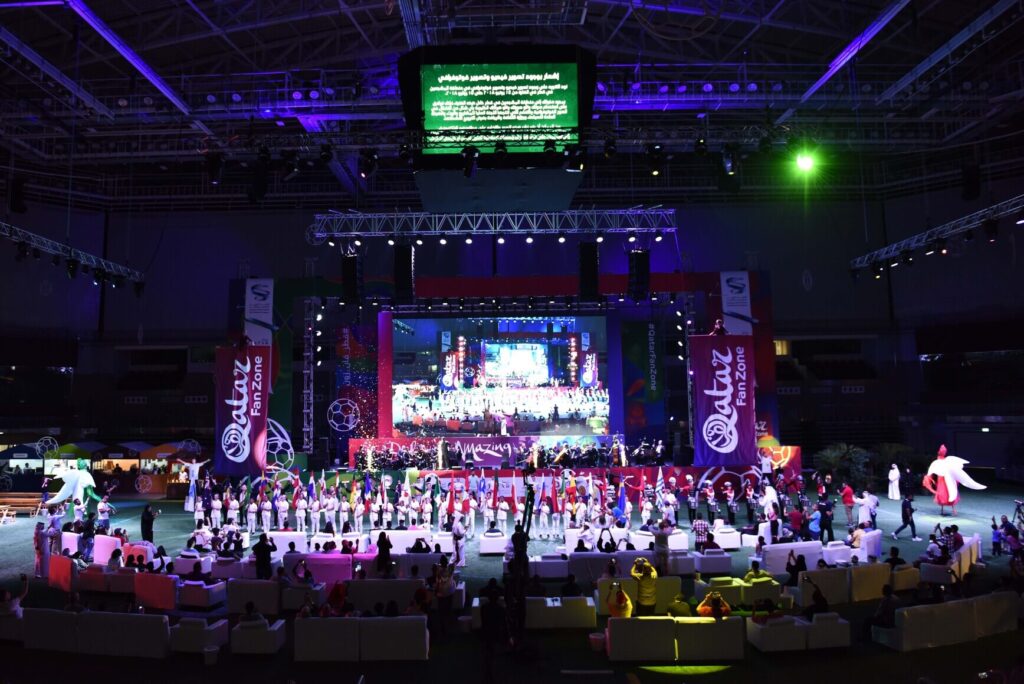
A large stage can actually make a show feel smaller when movement is concentrated in one area, performers lose visual connection, or choreography is designed as though the audience were standing only a few metres away.
For productions in GCC & Middle East, spatial choreography gives scale a clear purpose.
It considers not only what performers do, but where they do it, how far apart they are, how they move through architecture and what the audience sees from different parts of the venue.
Within across the GCC & Middle East, movement becomes part of the event’s visual architecture when choreography responds to the full dimensions of the performance environment.
Large Spaces Change How Movement Is Read
A movement that feels significant in a rehearsal studio can disappear on a stage several times larger.
Distance changes perception.
The audience may be seated far from the performers. Screens, scenic elements and lighting structures can compete for attention. A gesture that feels expressive at close range may not register from the back of the venue.
Spatial choreography responds by thinking in larger visual ideas.
This can involve:
- Strong formations
- Clear directional movement
- Contrasting levels
- Deliberate spacing
- Group synchronization
- Large pathways
- Controlled stillness
The objective is not simply to make every movement bigger.
It is to make the composition readable.
Empty Space Is Part of the Choreography
A large stage does not need to be filled continuously.
Empty space can create focus.
If one performer stands alone in a wide environment, the surrounding emptiness can make that figure feel more important.
If an ensemble begins tightly grouped and gradually expands across the stage, the space itself becomes part of the transformation.
This creates visual progression without adding more scenery or effects.
Formations Need to Work From the Audience Perspective
Choreography is often developed while looking at performers from the front of a rehearsal room.
A live venue is more complex.
Audiences may sit:
- Directly in front
- Far to the left
- Far to the right
- On elevated levels
- Around several sides of a performance zone
A formation that looks precise from one angle may collapse visually from another.
This is why customized live shows benefit from choreography developed with the actual stage geometry in mind.
Stage Depth Creates Another Dimension
Wide movement is only one way to use scale.
Depth can be equally powerful.
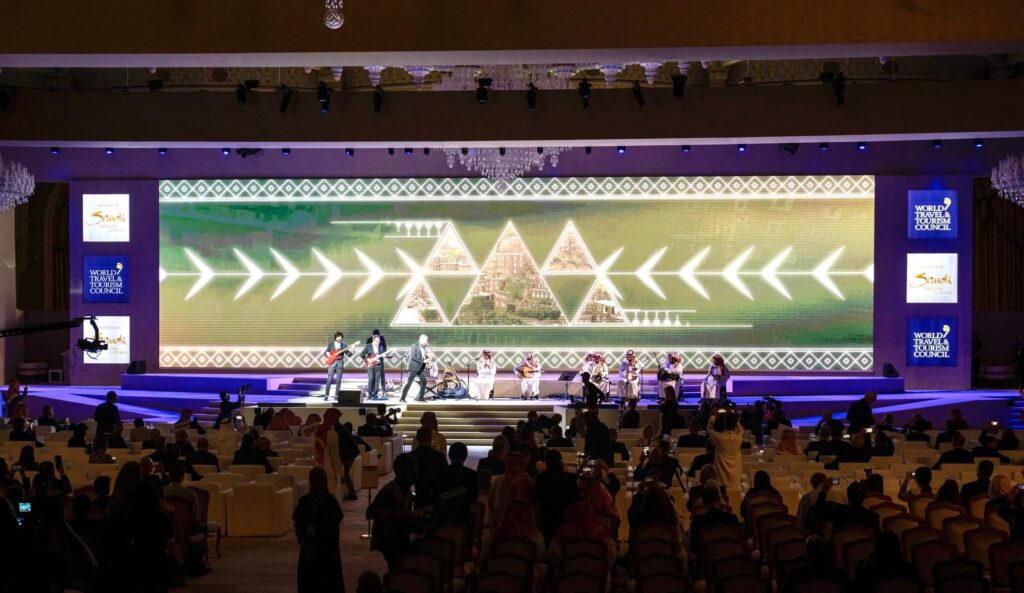
Performers positioned at different distances from the audience create layers.
A solo performer may occupy the front.
A secondary group can appear farther back.
Musicians may sit on an elevated rear platform.
Visual content can extend the composition beyond them.
The stage becomes a three-dimensional environment rather than a flat line of performers.
Entrances Should Be Designed as Movement
An entrance is already part of the choreography.
Performers do not need to appear on stage and then begin performing.
Their route into the space can establish rhythm, direction and hierarchy.
Entrances may come from:
- Stage wings
- Audience aisles
- Scenic openings
- Elevated platforms
- Behind projection surfaces
- Multiple directions simultaneously
The choice changes how the audience experiences the beginning.
Exits Matter Just as Much
A weak exit can reduce the impact of a strong scene.
If performers simply walk away after a final movement, the audience can feel the performance losing energy before the transition is complete.
An exit should be choreographed with the same care as an entrance.
It can resolve a formation, lead into another scene or transfer attention to another part of the stage.
Scenography Creates Boundaries
Large stages often contain architectural scenic elements.
These structures influence movement.
A scenic design can create:
- Corridors
- Frames
- Platforms
- Openings
- Levels
- Hidden entrances
- Central focal points
Choreography should understand these structures as part of the performance environment.
Performers should not appear to be moving around scenery that was designed separately.
The scenic world and movement should support one another.
Levels Change Visual Hierarchy
Platforms can immediately change how performers are perceived.
A performer positioned above an ensemble gains visual importance.
Several levels can create a layered composition without requiring continuous movement.
However, elevation should have a reason.
If everyone is raised equally, the hierarchy disappears.
Spatial direction asks where height adds meaning.
Group Size Does Not Determine Impact
A large stage does not automatically require a huge cast.
A smaller ensemble can occupy a large environment effectively when the movement is designed around scale.
Six performers with strong spacing can create a more confident composition than thirty performers grouped without clear structure.
Cast size should follow the creative idea.
Synchronization Can Make Space Feel Larger
When performers separated by significant distance execute the same movement simultaneously, the audience connects those points visually.
The stage suddenly feels unified.
This is particularly effective when choreography uses repeated gestures across different levels or zones.
The performers do not need to stand together to feel connected.
Timing creates the connection.
Contrast Makes Formations Visible
If every scene uses the full stage, scale becomes normal.
Contrast creates impact.
A show may move between:
- One performer in a narrow pool of light
- A small group entering from one side
- Two opposing formations
- A full-stage ensemble
- A final compressed image
The audience feels the space changing.
Lighting Can Redefine the Stage
The physical stage may be enormous, but lighting can make only part of it visible.
This gives creative teams the ability to change perceived scale without moving scenic structures.
A narrow lighting state can create intimacy.
A sudden full-stage reveal can then feel much larger.
Spatial choreography and lighting should therefore be developed together.
Projection Should Support Performer Scale
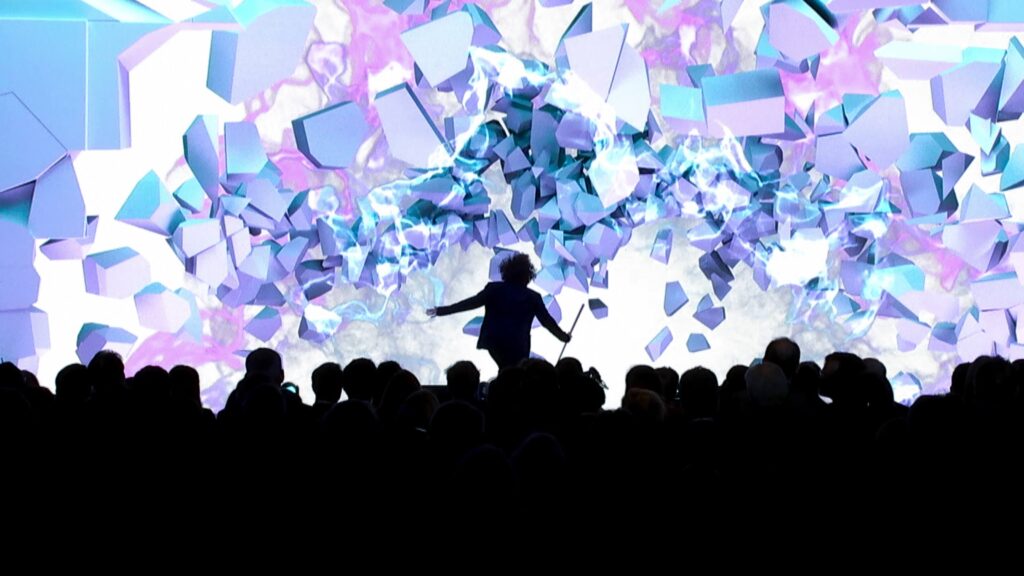
Large LED screens can easily dominate live performers.
If the visual content is too bright, detailed or fast, the human figures can become secondary.
For performances using interactive and immersive experiences, digital content can instead respond to the movement or reinforce the stage composition.
The goal is not to prove how much content the screen can display.
It is to keep the performer and environment connected.
Costume Helps the Audience Read Movement
Costume can make choreography more visible across distance.
Silhouette, fabric, contrast and movement qualities all affect how a performer reads from the audience.
Flowing fabric can extend movement.
Structured costumes can emphasize geometry.
Strong silhouettes can make individual figures clearer against complex scenic backgrounds.
The costume department therefore contributes directly to spatial clarity.
Music Influences Distance and Direction
Choreography often responds to musical structure.
On a large stage, music can also guide movement between zones.
A new musical phrase might introduce performers from another side.
A rhythmic section may bring separate groups together.
A sustained passage can create space for slower travel across the stage.
The soundtrack becomes a map.
Stillness Becomes Powerful at Scale
Movement does not need to be continuous.
Stillness can become especially striking on a large stage because the audience suddenly notices the composition.
A full ensemble holding one image while lighting changes around them can create more tension than constant choreography.
The absence of movement becomes intentional.
Cultural Movement Needs Spatial Sensitivity
When a production incorporates cultural movement, the goal should not be to enlarge gestures until they lose their character.
Instead, stage direction can amplify the overall composition while respecting the movement language itself.
A cultural show can use formations, levels, scenic framing and lighting to give traditional movement greater visual presence without distorting it.
Rehearsal Rooms Can Mislead
A choreography studio rarely has the exact dimensions of the final venue.
This means spacing that feels correct during early rehearsal may need substantial adjustment onsite.
The production should identify which parts of the choreography are flexible.
Distances can then be expanded or reduced while preserving:
- Timing
- Formations
- Relationships
- Narrative purpose
- Safety
Camera Coverage Adds Another Audience
Many large events are also filmed.
A spatial composition needs to work for the live audience and camera.
Very wide formations may look impressive in person but become difficult to capture in close coverage.
The camera plan should therefore understand when to use:
- Wide shots
- Medium group shots
- Close-ups
- Tracking movement
- Elevated views
Performance direction and broadcast direction should communicate.
Scale Needs a Focal Point
The audience cannot look everywhere at once.
Even the largest stage needs hierarchy.
At any moment, the audience should understand what matters most.
That focal point may be:
- One performer
- One scenic object
- One group
- One projection
- One reveal
Everything else should support it.
Spatial Choreography Supports Ceremonies
Opening and closing ceremonies often use large casts and large environments.
Spatial planning becomes essential because the performance may need to communicate a clear image to thousands of people.
In GCC & Middle East, ceremony stages can combine architecture, cultural performance, projection, live music and large ensembles.
The choreography needs to connect those layers without turning the stage into visual noise.
Large Stages Need Transition Logic
The larger the stage, the longer performers may need to travel.
Transitions must account for that distance.
A performer cannot instantly move from one side to another simply because the next scene needs them there.
Good direction plans the journey.
A performer may exit during another group’s sequence and re-enter elsewhere.
Lighting may redirect attention while positions change.
Scenic elements can conceal movement.
The audience experiences continuity.
Safety Shapes Movement
Large productions often include platforms, cables, technical equipment, moving scenery and low-light conditions.
Choreography must respect safe pathways.
A visually impressive route is not useful if performers cannot repeat it reliably.
Spatial planning should account for:
- Edge distances
- Steps
- Cable paths
- Scenic movement
- Lighting visibility
- Costume restrictions
Safety becomes part of good design.
The Venue Should Influence the Show
A customized production should not treat the stage as an empty rectangle.
Architecture can inspire movement.
A staircase can create levels.
A long runway can become a processional route.
A central opening can become a reveal point.
A curved stage can influence formations.
The more the choreography responds to the venue, the more specific the performance feels.
Scale Becomes Meaningful in GCC & Middle East
Large event environments across GCC & Middle East create opportunities for ambitious performance design.
But ambition should not be measured only by cast size, screen width or technical quantity.
The strongest use of scale is deliberate.
Movement expands when the story needs expansion.
The stage becomes intimate when the moment needs focus.
Performers occupy space with intention.
Scenery creates structure.
Lighting guides attention.
The audience does not simply see a large production.
They understand where to look and why.
That is what gives spatial choreography its value.
Frequently Asked Questions
What is spatial choreography?
Spatial choreography considers where performers move and position themselves within the full performance environment, including width, depth, levels and architectural features.
Does a large stage require more performers?
Not necessarily. A smaller ensemble can create strong visual impact when spacing and formations are designed for the scale of the venue.
Why should lighting be planned with choreography?
Lighting controls which parts of the stage are visible and can change the perceived scale, focus and hierarchy of a performance.
Can scenic design influence choreography?
Yes. Platforms, openings, frames, pathways and other scenic structures can become part of entrances, formations and movement.
Why is onsite rehearsal important for large stages?
Rehearsal in the actual venue allows spacing, travel distances, sightlines and safety requirements to be adjusted accurately.
Build a customized live show where performance, movement, scenography, and technology respond to the space around them.
Explore Customized Live ShowsYou May Also Like