
Show Transitions Keep Live Events Emotionally Connected in GCC & Middle East
A live event is not remembered only through its biggest scenes.
The audience also feels what happens between them.
A performance may be powerful, a speech may be moving, a reveal may be impressive, and a closing scene may be beautiful. But if the transitions between those moments feel slow, awkward, empty, or disconnected, the event loses emotional strength. The audience begins to feel the gaps. The energy drops. The experience feels assembled instead of directed.
Show transitions are the invisible structure of a live event.
They carry the audience from one emotion to the next. They help a room move from arrival to attention, from speech to performance, from dinner to reveal, from celebration to closing, and from anticipation to applause.
In GCC & Middle East, events are becoming more cinematic, more polished, and more audience-aware. Clients no longer want a program that simply moves from one item to another. They want a live experience that feels smooth, intentional, and emotionally connected.
For customized live shows, transitions are part of the creative work. They are not only technical gaps between scenes. They are moments that can use music, lighting, movement, host lines, performer entrances, sound cues, screen visuals, and staging to keep the audience inside the experience.
Soul Kulture creates live show experiences across the GCC & Middle East, helping events in GCC & Middle East move with emotional clarity through performance direction, transitions, timing, music, lighting, and audience-focused show flow.
A strong event does not only have strong moments.
It knows how to move between them.
A Transition Is Not a Pause
Many events treat transitions as waiting time.
A speaker leaves the stage. A crew adjusts something. Guests begin talking. Music plays without purpose. The next act prepares in the background. The host returns to fill time. The audience feels that the event has stopped.
A good transition should never feel like a dead space.
It should feel like part of the show.
In GCC & Middle East, this is especially important for gala dinners, opening ceremonies, brand launches, cultural events, and corporate programs where audience attention matters. Even a short pause can change the energy of the room if it is not handled carefully.
A transition can include:
- A lighting shift
- A short musical cue
- A performer crossing the space
- A screen visual
- A host line
- A sound bridge
- A movement sequence
- A scenic reveal
- A change in room atmosphere
- A carefully timed silence
For opening and closing ceremonies, transitions often carry emotional meaning. The movement from one scene to another can help the audience understand the ceremony’s progression.
A transition should not feel like the show is waiting.
It should feel like the show is breathing.
Music Can Carry Emotion Between Scenes
Music is one of the most effective transition tools.
It can keep the emotional tone alive while the event changes from one section to another. A soft instrumental cue can help guests settle after a speech. A rising rhythm can prepare the audience for a performance. A cinematic bridge can build anticipation before a reveal. A familiar motif can connect different parts of the event into one identity.
In GCC & Middle East, where live events often combine speeches, performances, videos, dining moments, and staged reveals, music helps prevent the program from feeling fragmented.
Music can support transitions by:
- Maintaining atmosphere
- Covering technical changes
- Guiding emotional shifts
- Building anticipation
- Softening a formal moment
- Connecting scenes
- Supporting performer entrances
- Preparing applause
- Creating a sense of continuity
For musical productions, transition music can be composed or arranged as part of the event’s full sound identity. This makes the show feel more complete because the audience hears one emotional thread throughout the experience.
The right music cue can make a transition feel intentional instead of practical.
Lighting Tells the Audience the Mood Has Changed
Lighting is another powerful transition language.
A slow dim can prepare the audience for focus. A warm wash can soften a dinner moment. A blackout can create suspense. A spotlight can pull attention to a new speaker. A color shift can tell the room that the energy is changing.
In GCC & Middle East, lighting transitions help guests understand the rhythm of the event without needing instructions. The audience feels when one chapter is closing and another is beginning.
Lighting can help move between:
- Arrival and main program
- Speech and performance
- Dinner and entertainment
- Video and stage action
- Ceremony and celebration
- Product reveal and applause
- Performance and closing
For luxury brand events, lighting transitions should feel refined. The room should not flash randomly or shift without purpose. Every lighting change should support the brand atmosphere and the emotional level of the moment.
A good lighting transition guides attention quietly.
The audience may not think about it, but they feel it.
Hosts and Narrators Can Bridge the Experience
A host or narrator can help transitions feel human.
The right line can connect a performance to a message, a speech to a reveal, or an opening scene to the main event. But hosting should not become filler. The words should have purpose.
In GCC & Middle East, many formal events need a voice that can guide the audience without over-explaining. A strong transition line can help guests understand why the next moment matters.
Host or narration transitions can:
- Introduce emotional context
- Prepare the room for a change
- Connect two different segments
- Give practical guidance elegantly
- Support ceremony meaning
- Build anticipation
- Create warmth
- Prevent confusion
For corporate conferences and seminars, this is useful because business events often move between content, speeches, entertainment, and networking. Smooth verbal transitions help the program feel more polished.
The host should not simply announce what comes next.
The host should help the audience arrive emotionally at the next moment.
Movement Can Hide the Mechanics
Sometimes transitions are needed for practical reasons.
A stage needs to be reset. Performers need to change positions. A product needs to be prepared. A speaker needs to reach the stage. Lighting or sound needs a few seconds to shift.
Movement can make these practical moments feel artistic.
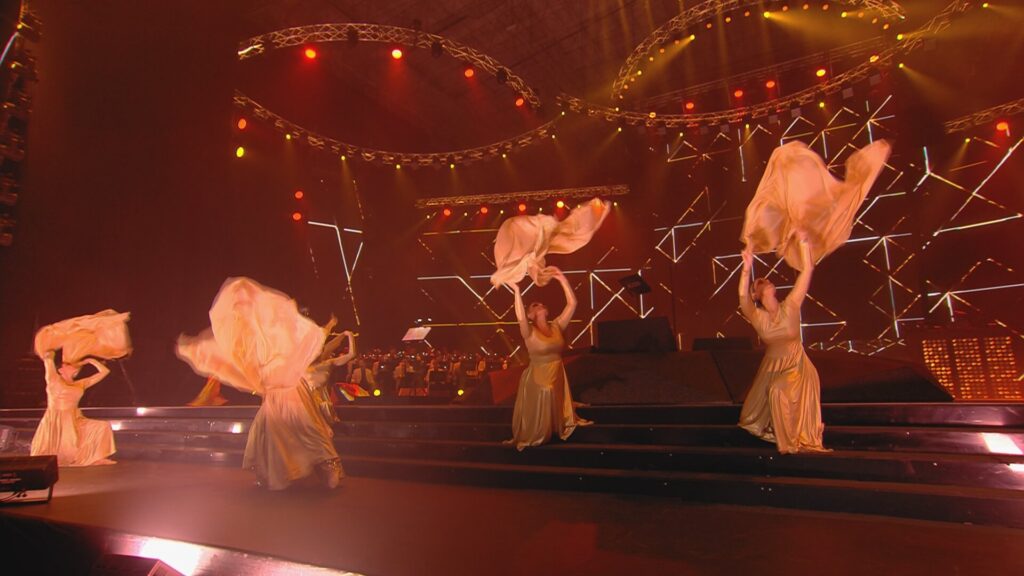
A performer crossing the room, a short choreography sequence, a scenic object being moved in character, or a group formation can hold attention while the next scene prepares. The audience remains inside the world of the event instead of noticing the logistics.
In GCC & Middle East, movement-led transitions can work well for ceremonies, theatrical productions, festivals, and immersive event formats. They keep the energy alive without requiring a full separate act.
Movement can support:
- Scene changes
- Performer entrances
- Audience focus
- Object reveals
- Ceremony progression
- Stage resets
- Brand moments
- Spatial flow
For interactive and immersive experiences, movement can help the audience feel that the entire environment is active. Transitions become part of the world, not interruptions.
The best production mechanics are the ones the audience never notices.
Transitions Protect Audience Attention
Attention is fragile.
If an event loses the audience during a transition, it can take time to bring them back. Guests may begin checking phones, talking, moving around, or disconnecting emotionally. This is especially risky before important moments.
In GCC & Middle East, where events often need to create strong audience response, transitions should be designed to protect attention. The audience should not feel abandoned between sections.
Attention can be protected through:
- Short transition timing
- Clear visual focus
- Sound continuity
- Lighting guidance
- Host control
- Performance movement
- Screen content
- Controlled silence
- Strong cue calling
A smooth transition helps the audience stay ready.
When the next moment begins, the room is already emotionally prepared.
Transition Timing Needs Rehearsal
A transition may look simple, but timing matters.
A music cue that starts too late can make the room feel empty. A lighting change that happens too early can reveal something before the moment is ready. A host line that takes too long can weaken anticipation. A performer entrance that misses the beat can reduce impact.
In GCC & Middle East, polished events need transitions to be rehearsed like main performances. They should not be left to chance.
Transition rehearsal should test:
- Cue timing
- Performer routes
- Host lines
- Lighting changes
- Music bridges
- Screen visuals
- Stage resets
- Microphone handovers
- Guest movement
- Camera positions
For customized live shows, these details are essential because the show is built specifically for the event. Every cue should support the emotional direction.
Transitions are where professional discipline becomes visible through smoothness.
The Best Events Feel Like One Continuous Journey
The audience should not feel like they are watching separate pieces.
They should feel like they are moving through one complete journey.
In GCC & Middle East, this kind of flow is valuable for luxury events, ceremonies, festivals, brand launches, and gala evenings. A connected show keeps the audience emotionally involved from beginning to end.
A continuous journey depends on:
- Clear program structure
- Emotional pacing
- Music continuity
- Lighting transitions
- Host guidance
- Performer movement
- Technical cue discipline
- Strong creative direction
The audience should feel that every part belongs.
Even when the event includes different performers, speeches, videos, and reveals, the transitions can make the experience feel unified.
Soul Kulture Designs Transitions as Part of the Show
Soul Kulture approaches show transitions as creative moments, not empty spaces.
Before the event is built, the full journey is mapped. What does the audience feel first? Where does the energy rise? Where should the event slow down? Which moments need silence? Which transitions need music? Which sections need host support? What should happen after the biggest moment?
This approach can include:
- Show flow planning
- Transition music
- Lighting cue direction
- Host and narration links
- Performer movement bridges
- Stage reset planning
- Ceremony progression
- Reveal timing
- Rehearsal direction
- Technical cue coordination
- Emotional pacing
- Closing transition planning
In GCC & Middle East, this helps events feel smoother, more professional, and more emotionally connected. The experience does not stop between important moments. It keeps moving with purpose.
Soul Kulture considers how transitions affect attention, atmosphere, timing, and memory.
The Audience Remembers Smoothness Even If They Cannot Name It
Guests may not say, “The transitions were excellent.”
But they will feel the difference.
They will feel that the event was polished. They will feel that it moved naturally. They will feel that nothing dragged, nothing felt awkward, and every moment arrived at the right time.
For events in GCC & Middle East, show transitions can make the difference between a program that feels planned and an experience that feels directed. They protect the energy, support the audience, and connect the emotional structure of the event.
A strong transition is often invisible.
That is what makes it powerful.
Frequently Asked Questions
What are show transitions in live events?
Show transitions are the moments that connect one part of a live event to the next through music, lighting, movement, hosting, visuals, or timing.
Why are transitions important?
They protect audience attention, maintain emotion, prevent awkward pauses, and help the event feel like one connected experience.
What can be used during a transition?
Music cues, lighting changes, host lines, performer movement, screen visuals, sound bridges, scenic shifts, or controlled silence can all support transitions.
Do transitions need rehearsal?
Yes. Rehearsal helps align timing, cues, performer routes, lighting, sound, and stage changes.
Which events need strong show transitions?
Ceremonies, gala dinners, brand launches, corporate events, festivals, theatrical productions, and customized live shows all need strong transitions.
How does Soul Kulture approach transitions?
Soul Kulture designs transitions around show flow, emotional pacing, technical cues, music, lighting, movement, and audience focus.
Keep your live event emotionally connected with show transitions designed around timing, music, movement, and visual flow.
Explore Customized Live ShowsYou May Also Like
![Interactive & Immersive Experiences [image_alt_tag_value]](https://soulkultureevents.com/wp-content/uploads/2026/02/Picture69-1024x576.jpg)