From Brief to Stage: The Making of a Customized Live Show in GCC & Middle East
A customized live show should not begin with a list of available performers.
It begins with a brief.
The brief might contain a brand message, cultural idea, event theme, venue, audience profile, product, institutional objective or emotional direction. Sometimes it is highly detailed. Sometimes it is only a few sentences describing how the client wants the audience to feel.
The creative process turns that starting point into something physical.
Music gains structure. Performers gain roles. Movement takes shape. Costumes establish identity. Scenography creates a world. Lighting builds atmosphere. Technical systems turn ideas into repeatable cues.
For productions in GCC & Middle East, the value of customization is that the show does not need to feel imported from another event.
It can belong to the occasion.
Within across the GCC & Middle East, customized entertainment becomes strongest when creative and technical decisions grow from the same central idea rather than being selected independently.
The Brief Needs to Reveal the Real Objective
Clients do not always describe the real objective directly.
A brief may say:
“We need a five-minute opening performance.”
But the deeper need might be to introduce a new era for an organization.
Another client may request a product-launch show when the real objective is to build anticipation before an important reveal.
A cultural event may ask for dance when the deeper objective is to express identity without making the experience feel traditional in a predictable way.
The first creative step is therefore interpretation.
Useful questions include:
- What is the event actually celebrating?
- What should the audience feel?
- What should they understand?
- What should they remember afterward?
- What cannot happen?
- What must happen?
- What makes this occasion different?
The answers create a more useful foundation than performance genre alone.
The Audience Changes the Creative Direction
A show is not created only for the client.
It is created for the people in the room.
Audience characteristics can influence:
- Pacing
- Performance scale
- Cultural references
- Music
- Visual complexity
- Language
- Duration
- Level of formality
A show created for senior government leaders may require a different tone from one designed for a public festival.
A luxury audience may respond better to controlled detail than continuous spectacle.
A large family audience may need stronger visual clarity.
Customization begins with understanding who will experience the work.
The Venue Enters the Concept Early
A creative concept should not be finalized without understanding the venue.
Architecture affects what is possible.
The team needs to know:
- Stage dimensions
- Audience distance
- Ceiling height
- Entrances
- Rigging
- Projection surfaces
- Backstage access
- Existing technical infrastructure
A performance developed through customized live shows should respond to these realities from the beginning.
A venue limitation can even become a creative opportunity.
A staircase may become an entrance.
A central aisle may support a processional sequence.
A wide stage may inspire horizontal choreography.
A tall atrium may encourage vertical composition.
The site starts to shape the performance.
Concept Development Gives the Show One Language
Once the brief is understood, the creative team can establish the central concept.
The concept should be specific enough to guide decisions.
It may define:
- Emotional tone
- Narrative structure
- Visual palette
- Performance language
- Musical world
- Scenic direction
- Costume logic
Without a concept, departments may create individually strong work that does not belong together.
The lighting team creates one world.
Costume creates another.
Music suggests something else.
The performers then try to connect everything on stage.
A strong concept prevents that fragmentation.
Narrative Gives the Show Progression
Not every customized show needs characters or dialogue.
It still needs progression.
A performance may move through three simple phases:
- Establish: Introduce the world and central idea
- Transform: Develop energy, scale or meaning
- Resolve: Bring the concept into one clear final image
This structure gives the audience somewhere to go.
Without progression, a show can become a collection of attractive moments without direction.
Narrative is what connects them.
Music Creates the Emotional Framework
Music often becomes one of the earliest creative tools because it establishes timing and emotional structure.
The musical direction may be:
- Cinematic
- Cultural
- Contemporary
- Electronic
- Orchestral
- Percussive
- Vocal
- Hybrid
A customized show can also use original composition.
That provides greater control over:
- Duration
- Builds
- Pauses
- Transitions
- Final cues
- Choreographic accents
The music becomes shaped around the show rather than forcing the show into an existing track.
Choreography Begins With Purpose
Movement should communicate something.
Large formations can create scale.
Small controlled gestures can create intimacy.
Fast movement can build energy.
Stillness can establish confidence.
Choreography may respond to:
- Story
- Music
- Architecture
- Brand geometry
- Cultural movement
- Visual content
- Props
The goal is not to fill every musical beat.
It is to decide when movement adds meaning.
Performer Selection Comes After Creative Direction
Choosing performers too early can limit the idea.
A creative concept should first define what skills are required.
The production may need:
- Dancers
- Musicians
- Actors
- Vocalists
- Specialty performers
- Cultural artists
- Physical theatre performers
Different combinations create different worlds.
Casting then focuses on performers who can deliver the concept rather than building a concept around whoever happens to be available.
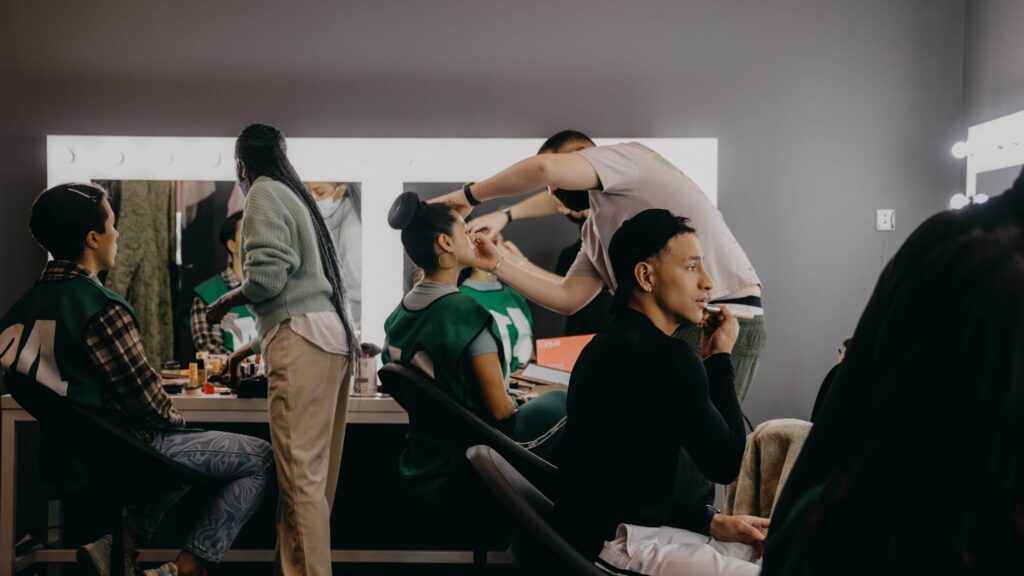
Costume Develops From the Same World
Costume is often one of the clearest signals that a show has been customized.
Generic performance clothing can immediately make a bespoke concept feel less specific.
Costume direction can draw from:
- Brand identity
- Architecture
- Culture
- Story
- Material
- Movement
- Lighting
A cultural show may require deeper historical and regional research.
A contemporary production may use subtler references.
The costume should feel like an extension of the same idea already present in the music and movement.
Scenography Gives the Performance a Place to Exist
A customized show can sometimes work within an existing event stage.
Other concepts need physical scenography.
This may include:
- Platforms
- Frames
- Sculptural objects
- Fabric
- Screens
- Kinetic pieces
- Projection surfaces
The scenic design should help the performance.
It should not simply create a beautiful background.
Performers need routes.
Musicians need positions.
Technical equipment needs access.
Visual elements need sightlines.
The scenic world has to function live.
Digital Content Needs the Same Creative Direction
Screens and projection can dramatically expand a customized performance.
They can also become the fastest way to make the show feel generic if they are developed separately.
Visual content should respond to:
- Music
- Choreography
- Costume
- Stage geometry
- Emotional progression
Within interactive and immersive experiences, digital layers can become even more integrated by responding to physical surfaces or performer movement.
The technology should deepen the world rather than sit behind it.
Lighting Decides What the Audience Sees
A customized show may contain dozens of visual elements.
The audience should not see all of them at full intensity simultaneously.
Lighting creates hierarchy.
It can:
- Hide the stage before a reveal
- Focus on one performer
- Expand to the full ensemble
- Reveal architecture
- Create silhouettes
- Change the emotional temperature
The lighting design should develop alongside staging.
Waiting until the final rehearsal to decide how a performance will be lit can weaken the concept.
Technical Feasibility Protects Ambition
Creative development needs technical reality.
A beautiful idea still needs to function.
Technical teams may review:
- Rigging
- Power
- Stage loading
- Projection distance
- Audio
- Automation
- Performer safety
- Venue access
This process should not be seen as creativity versus production.
Technical planning allows creative ambition to survive the live environment.
The Prototype Stage Can Save Time
Some ideas benefit from testing before full production.
A costume material can be placed under theatrical light.
A movement can be tested against projection.
A scenic mechanism can be built at smaller scale.
A musical cue can be rehearsed before the full cast arrives.
Prototyping identifies problems while they are still relatively easy to change.
Rehearsal Turns Design Into Performance
The concept only becomes real when performers begin using it.
Rehearsal reveals:
- Timing issues
- Weak transitions
- Costume restrictions
- Scenic conflicts
- Spacing problems
- Musical adjustments
- Cue changes
A customized show needs enough rehearsal to move beyond individual departments.
Eventually everyone needs to experience the same run.
That is when the production begins to feel like one system.
Musical Integration Requires Its Own Rehearsal
When live musicians are involved, musical direction and staging need close coordination.
A musical production may include fixed musical sections, but live timing still contains human variation.
Performers need to know where musical accents happen.
Musicians need to understand stage action.
Technical cues need to follow the real performance rather than an imaginary timing.
This is why complete rehearsals matter.
Cue-to-Cue Rehearsal Builds Technical Precision
Not every rehearsal needs to run the entire show.
Cue-to-cue sessions focus on transitions and technical moments.
The team may repeatedly test:
- Music start
- Performer entrance
- Lighting change
- Screen transition
- Scenic movement
- Reveal
- Final blackout
These repetitions create reliability.
The audience eventually experiences one smooth moment.
Changes Are Part of Customization
Customized work evolves.
A movement may look different in the actual venue.
The client may refine the event message.
The stage dimensions may change.
A visual idea may become too complicated.
The strongest process allows adjustment while protecting the central concept.
Not every original idea needs to survive.
The creative direction needs to survive.
Scale Should Serve the Moment
Customized does not automatically mean larger.
A small ensemble can be more powerful than fifty performers if the concept requires intimacy.
A single musician can create more emotional weight than a large technical effect.
Scale should be intentional.
Use more only when more adds meaning.
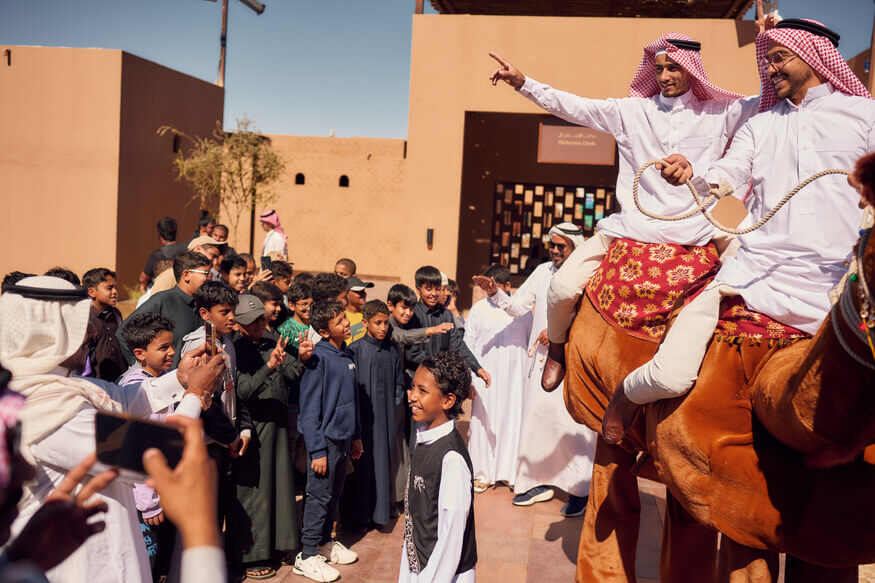
Cultural Context Matters in GCC & Middle East
A performance created for GCC & Middle East needs awareness of the local environment.
Cultural context may influence:
- Costume
- Music
- Performer selection
- Movement
- Language
- Visual references
- Protocol
Localization should not be a final decorative layer.
It should inform the concept when relevant.
This allows the production to feel rooted without becoming predictable.
The Final Image Deserves Early Attention
A customized show should know where it is going.
The final image may bring together:
- Full cast
- Central symbol
- Lighting
- Music
- Projection
- Scenic transformation
If the creative team knows this destination early, earlier scenes can prepare for it.
The ending feels earned rather than added.
A Bespoke Show Should Be Difficult to Move Elsewhere
One useful test of customization is simple:
Could the exact same show be moved into another client’s event tomorrow without changing anything?
If the answer is yes, the work may not be as customized as it appears.
A bespoke show should contain enough connection to the brief, venue, audience and objective that it feels specific.
Its music may belong to the story.
Its visual language may respond to the space.
Its finale may connect to the event message.
Its performers may be cast specifically for the concept.
That specificity creates value.
From Brief to Stage in GCC & Middle East
The audience sees the final minutes.
The creative process may have started weeks or months earlier.
Research, concept development, music, casting, choreography, scenography, costume, technical design and rehearsal eventually disappear behind the experience itself.
That is the goal.
The audience should not need to see the process.
They should feel that every layer belongs.
A customized live show succeeds when the production does not look assembled.
It looks inevitable.
Frequently Asked Questions
What makes a live show customized?
A customized live show is developed around the specific event brief, audience, venue, message and creative objective rather than using a ready-made performance unchanged.
When should performers be selected?
Ideally, the concept and required performance skills should be defined first so casting can support the creative direction.
Can technology be part of a customized live show?
Yes. Projection, lighting, interactive systems and scenic technology can be integrated when they support the concept.
How important is rehearsal?
Rehearsal is essential because it connects performers, music, staging and technical cues and reveals issues that cannot be identified on paper.
Can customized shows include cultural elements?
Yes. Cultural music, movement, costume and storytelling can be incorporated when they are researched and connected meaningfully to the event.
Build a customized live show where every creative and technical layer supports one complete performance world.
Explore Customized Live ShowsYou May Also Like
![MSC Naming Ceremony [image_alt_tag_value]](https://soulkultureevents.com/wp-content/uploads/2026/03/DSC_4609-1024x683.jpg)