Scenic Automation Beyond the Moving Platform in GCC & Middle East
A stage can transform without changing venues.
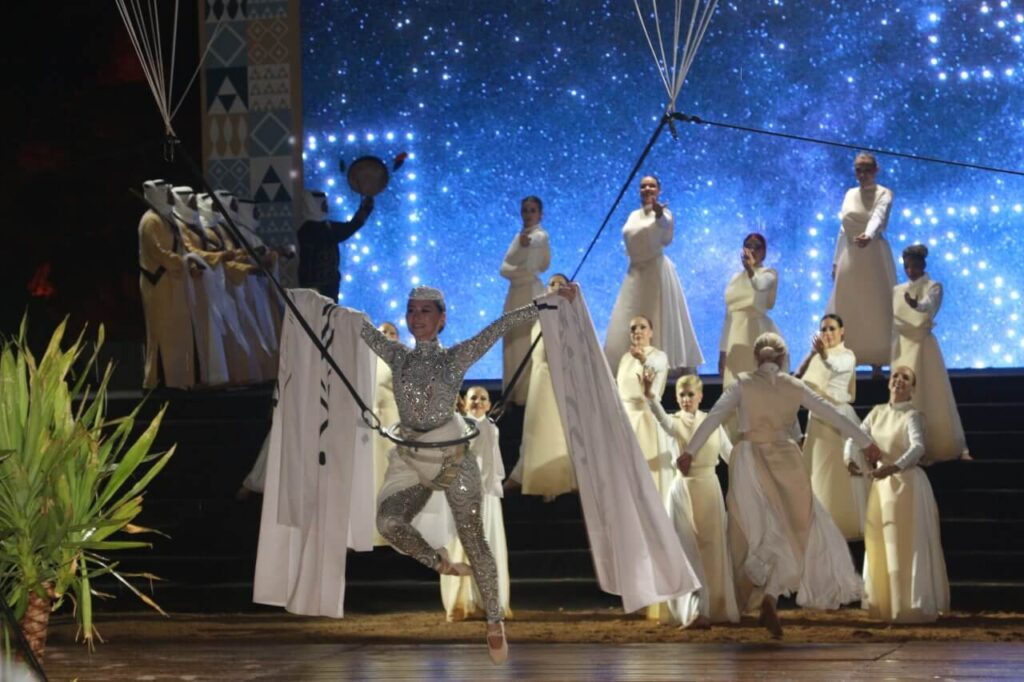
A wall may move to reveal another performance space. A platform can rise into view. A scenic structure may rotate, creating an entirely different visual composition.
These transformations are often made possible through scenic automation.
However, automation is not simply a technical method for moving large objects.
Its real value comes from how movement contributes to the performance.
A moving scenic element should have a creative purpose, a defined relationship to performers and a carefully planned operational structure.
For live productions in GCC & Middle East, scenic automation can support ambitious theatrical environments when design, engineering, choreography and stage management are developed together.
Within across the GCC & Middle East, automated scenery becomes part of the storytelling language rather than an isolated technical effect.
What Scenic Automation Means
Scenic automation refers to the controlled mechanical movement of scenic elements during a live production.
It can involve systems designed to move platforms, walls, curtains, suspended structures or other stage components.
The movement may be vertical, horizontal, rotational or a combination of several directions.
Different systems require different engineering and control methods.
The creative team does not need to design the machinery itself, but it must understand what the intended movement needs to accomplish.
The technical solution should follow the artistic requirement.
Movement Needs a Creative Reason
A moving stage element can attract attention immediately.
However, movement alone does not create meaningful theatrical impact.
The audience needs a reason to experience the transformation.
A wall opening may reveal a new chapter of the performance.
A platform rising may establish the importance of a central performer.
A rotating structure may suggest a change in time or location.
The scenic movement should communicate something that static scenery cannot express as effectively.
Avoid Automation for Its Own Sake
A production can become overly complicated when every scene contains mechanical movement.
Repeated transformations may eventually lose their impact.
They also introduce additional technical and rehearsal requirements.
Creative direction should identify the moments that genuinely benefit from automation.
Sometimes a lighting transition or performer movement can create the required effect more simply.
The most sophisticated production is not necessarily the one with the most moving machinery.
The Relationship Between Scenic Design and Engineering
Automated scenery begins as a creative idea.
That idea must then be evaluated by qualified technical specialists.
A designer may imagine a large wall moving silently across the stage.
Engineers need to determine how the structure can be supported, driven, controlled and stopped safely.
They must also consider the venue’s physical limitations.
The final design emerges through collaboration.
The scenic concept and engineering requirements cannot be treated as independent projects.
Structural Weight Changes Everything
A scenic structure has mass.
That mass affects the equipment required to move it.
Materials, dimensions, internal construction and decorative finishes all contribute to the total weight.
A lightweight scenic panel may require a very different solution from a large architectural structure.
The engineering team needs reliable load information before selecting or approving a movement system.
Late design changes that increase weight can affect the entire automation plan.
Stage Architecture Determines What Is Possible
Not every venue can support the same scenic movements.
Ceiling height, structural capacity, stage depth and available backstage space all influence automation.
A suspended scenic element may require suitable rigging infrastructure.
A moving wall may need a clear travel path.
A rising platform may require space below or within the stage.
These conditions should be assessed before the creative team commits to a particular transformation.
Designing the Movement Path
A scenic element needs a defined route.
That route should account for every position the structure occupies during movement.
The production must understand whether it could conflict with performers, equipment or other scenic elements.
This is particularly important when multiple moving structures operate in the same scene.
Movement paths should be reviewed and approved by the responsible technical specialists.
Clearance Is Not Only About the Final Position
A structure may fit perfectly in its starting and ending positions but still create a problem while moving between them.
Corners, protruding details and decorative elements can affect clearance.
The full movement envelope needs to be considered.
This is one reason technical modeling and physical testing are valuable before live operation.
Performers and Moving Scenery
Automation becomes more complex when performers occupy the same stage area.
A performer may need to enter immediately after a platform reaches position.
Another may need to move away before a wall begins traveling.
These actions require precise coordination.
The choreography should be developed with an understanding of the automation system’s approved operating conditions.
Performers must never be expected to improvise around moving scenery.
Safety Zones and Operating Procedures
Automated scenery can introduce significant physical hazards.
Qualified engineers and operators must establish appropriate safety procedures.
These may include restricted movement zones, emergency stopping arrangements, interlocks and confirmation protocols.
The exact safeguards depend on the equipment and risk assessment.
The creative team should respect those procedures throughout rehearsals and performances.
No visual effect is important enough to justify bypassing a required safety control.
The Role of the Automation Operator
The automation operator is responsible for operating the approved movement system within its defined procedures.
This is different from the role of the show caller.
The caller may coordinate when a scenic cue is required.
The automation operator and responsible technical personnel determine whether the movement can be executed safely.
Clear authority prevents confusion.
A scheduled cue should never override a safety-related decision.
Timing a Scenic Transformation
A scenic movement may need to align with music, lighting or performer action.
The timing should be defined during creative planning.
For example, a wall might begin opening during a gradual musical build.
Its final position may need to coincide with the appearance of a lead performer.
The technical team should determine whether the desired timing is achievable within safe operating limits.
The creative sequence can then be adjusted to match the approved movement characteristics.
Music Can Conceal or Emphasize Movement
Music influences how a scenic transformation is perceived.
A gradual orchestral build can create anticipation while a structure moves.
A sharp musical accent may emphasize the moment a reveal is completed.
In another production, the sound of the machinery may need to be minimized so that the movement feels almost invisible.
The musical direction should understand the movement’s duration and intended emotional effect.
Lighting Supports the Illusion
Lighting can make scenic automation feel more dramatic.
A moving wall may remain partially concealed in darkness.
A narrow beam can reveal its edge.
A change in lighting state can introduce the space behind it.
These choices help the audience understand the transformation.
Poor lighting coordination may expose technical details or reduce the intended impact.
For customized live shows, lighting and automated scenery should therefore be developed as connected creative systems.
Projection and Moving Surfaces
Automated scenery can interact with projected content.
A moving surface may carry visual imagery or reveal another projection plane.
This creates opportunities for layered visual effects.
However, movement changes the surface’s position and geometry.
The projection system must account for that behavior.
Content alignment, tracking and timing may require specialist planning.
A static projection setup cannot automatically be assumed to work on a moving scenic element.
LED Screens as Moving Scenic Elements
LED screens may be integrated into moving structures.
This can create visually striking transitions, but it introduces additional requirements.
Power, signal routing, cable management, structural support and movement limits need to be considered.
The weight of the screen system can be substantial.
The engineering team must evaluate the complete assembly rather than treating the LED surface as a purely visual component.
Automation for Product Reveals
Brand launches sometimes use scenic movement to introduce a product.
A wall may separate.
A platform may reveal an object.
A scenic enclosure may open.
The purpose is to focus attention on the product at the correct moment.
For brand and product launch entertainment, the reveal mechanism should support the product’s identity and presentation requirements.
The movement must also respect the object’s physical characteristics and any relevant operational restrictions.
Scenic Movement in Ceremonial Productions
Large ceremonies may use automated scenery to create changes in scale.
A relatively intimate opening can develop into a much larger visual environment.
Architectural elements may move to reveal performers or new scenic layers.
These transformations can help establish the structure of the ceremony.
However, ceremonial programs often include strict timing and protocol requirements.
Automation needs to fit within that operational framework.
Rehearsal With Automation Requires a Different Approach
Performers should not encounter a moving scenic system for the first time during a final dress rehearsal.
The rehearsal process should introduce the approved movement in a controlled manner.
Technical teams need time to test the system independently.
Stage management then coordinates performer familiarization and full-sequence rehearsal.
The exact process must follow the system’s safety plan.
Rehearsal is essential for timing, confidence and operational clarity.
Technical Testing Before Artistic Integration
The automation system needs to be commissioned and tested by qualified personnel before it becomes part of the full performance.
Testing should verify that the system operates within its approved parameters.
Only after appropriate technical readiness should the production integrate performers and creative cues.
This separation helps identify technical issues without placing unnecessary pressure on the artistic rehearsal.
It also gives the team a clearer understanding of the system’s actual movement characteristics.
Designing for Failure Conditions
A responsible production considers what happens if an automated element does not complete its movement.
The show may need an alternative visual state.
Performers may need a different entrance route.
The stage manager may need to hold the next sequence.
These alternatives should be planned with the responsible technical and safety personnel.
A contingency is not permission to operate a malfunctioning system.
It is a way to maintain safe control of the production when the original sequence cannot proceed.
Backup Creative States
Not every automated transformation needs to be essential to the continuation of the show.
In some productions, lighting or video can provide an alternative visual transition.
A scene may be able to proceed without a noncritical scenic movement.
These possibilities should be identified early.
They are much harder to introduce when the performance is already underway.
The creative team should know which movements are essential and which can be omitted safely under an approved contingency plan.
Scenic Automation and Repeated Performances
A one-night ceremony has different operational demands from a production performed repeatedly.
A touring or long-running show may require automation systems that can be maintained, inspected and operated consistently across many performances.
Repeated use introduces considerations around wear, maintenance and technical support.
The production should understand the expected operating schedule from the beginning.
For interactive and immersive experiences, repeated scenic transitions may form part of a longer installation or performance cycle.
Transport and Installation
Automated scenic systems can be complex to transport.
Large structures may need to be divided into sections.
Mechanical components require appropriate protection.
Installation may involve specialist technicians and lifting equipment.
The venue’s loading access can influence the design.
A scenic transformation that appears elegant on stage may require significant logistical planning before it can be assembled.
These practical conditions should be included in the production timeline.
Automation and the Visual Language of a Show
Movement has its own visual character.
A slow, controlled scenic transformation can feel monumental.
A rapid transition can create surprise.
A series of smaller movements may suggest gradual change.
The appropriate movement quality depends on the production’s concept and the system’s approved capabilities.
The creative team should think about automation as a form of visual expression rather than simply a method of changing scenery.
When Static Scenery Is the Better Choice
Automation is not always necessary.
A static scenic environment can be powerful when supported by lighting, projection and performer movement.
The decision should consider whether mechanical transformation adds enough creative value to justify its complexity.
For some events, a simple stage with strong artistic direction will communicate more clearly than a technically elaborate moving environment.
Choosing not to automate can be a deliberate creative decision.
Technical Collaboration in GCC & Middle East
Major live productions in GCC & Middle East may take place in purpose-built venues, temporary event structures or adapted architectural spaces.
Each environment creates different technical conditions.
The automation concept must respond to the actual site.
Qualified engineering review, venue coordination and realistic installation planning are essential.
A system suitable for one stage cannot automatically be transferred to another without reassessment.
A Transformation Should Feel Inevitable
The strongest scenic movements are not remembered only because something moved.
They are remembered because the movement completed a meaningful visual idea.
A wall opens and reveals the next world.
A platform rises and changes the hierarchy of the stage.
An architectural structure transforms at the exact moment the story requires it.
For opening and closing ceremonies, such transformations can become defining moments when they are carefully integrated into the overall narrative.
The Complete System Behind the Effect
Scenic automation involves several interconnected responsibilities.
Creative direction establishes the purpose.
Scenic design defines the physical form.
Engineering determines what can be achieved safely.
Technical operators control the approved movement.
Stage management coordinates performers and cues.
Lighting, music and visual content shape how the transformation is experienced.
For productions in GCC & Middle East, successful automation depends on these disciplines working together from the beginning.
The moving structure is only the visible result.
The real achievement is a complete theatrical transformation that feels natural within the performance, remains technically controlled and serves the creative story.
Frequently Asked Questions
What is scenic automation in live events?
Scenic automation involves controlled mechanical movement of stage elements such as platforms, walls or suspended structures during a production.
Does every large live show need automated scenery?
No. Automation is useful when physical movement serves a clear creative purpose, but static scenery can also support sophisticated productions.
Can performers share a stage with automated scenery?
Yes, when the system is professionally engineered and operated under approved safety procedures, with appropriate rehearsal and coordination.
Can projection mapping work on moving scenery?
Yes, but moving surfaces introduce additional alignment, tracking and technical requirements that need specialist planning.
Why is contingency planning important for scenic automation?
Contingency planning establishes safe responses if a scenic movement cannot proceed, helping the production maintain control without bypassing technical safeguards.
Text: Build a customized live show where scenic movement, performance, lighting, and technical direction create purposeful theatrical transformations.
Button: Explore Customized Live Shows
Target: customized-live-shows
[/cta]
You May Also Like