
Stage Symbols Give Ceremonies a Clear Visual Meaning in Dubai
A ceremony is not only a program.
It is a moment of meaning.
Whether it opens a major event, closes a festival, launches an initiative, celebrates a milestone, honors a group, or marks a public occasion, a ceremony needs visual clarity. The audience should feel that the moment has importance. They should understand that what they are watching carries purpose.
Stage symbols help create that clarity.
A symbol can be an object, gesture, formation, light, fabric, architectural element, movement, screen visual, color, or performer image that carries meaning inside the ceremony. It gives the audience something to read emotionally, even before words explain the message.
In Dubai, ceremonies are becoming more visual and more experience-led. Audiences expect opening and closing moments that feel polished, powerful, and emotionally clear. The ceremony should not feel like a performance placed before or after an event. It should feel like the event’s meaning has been shaped into a live visual language.
For opening and closing ceremonies, symbols can help communicate unity, progress, heritage, transformation, celebration, innovation, or legacy. They give the ceremony a stronger identity and help the audience remember the moment.
Soul Kulture creates ceremony entertainment experiences across Dubai, Abu Dhabi and Sharjah, helping events in Dubai express meaning through stage symbols, movement, performance direction, atmosphere, and visual storytelling.
A strong ceremony does not only tell people something important is happening.
It shows them.
A Symbol Makes the Message Visible
Some messages are difficult to communicate through speeches alone.
Unity, ambition, heritage, hope, progress, transformation, and celebration are emotional ideas. They can be explained through words, but they become stronger when the audience can see them.
A stage symbol gives the message a visible form.
In Dubai, this can be valuable for public ceremonies, national events, corporate milestones, cultural festivals, institutional openings, brand moments, and destination experiences. The symbol helps the audience connect with the purpose of the event without needing a long explanation.
A symbol might appear as:
- A central scenic object
- A repeated visual motif
- A performer formation
- A ceremonial gesture
- A lighting reveal
- A fabric movement
- A musical cue
- A cultural object
- A screen animation
- A final stage image
- A pathway or procession
- A color shift
For cultural festival production, symbols can help connect cultural references to the structure of the festival. They make heritage visible in a way that feels intentional and respectful.
A symbol should not feel random.
It should carry the event’s meaning clearly.
The Symbol Should Be Simple Enough to Read
A stage symbol does not need to be complicated.
In fact, the strongest symbols are often simple. The audience needs to understand the image quickly, especially in a live setting where the moment may only last a few seconds.
If the symbol is too abstract, the audience may not connect with it. If it is too literal, it may feel basic or decorative. The challenge is to create an image that is clear, elegant, and emotionally useful.
In Dubai, ceremonies may include mixed audiences, VIP guests, families, corporate leaders, international visitors, or public crowds. A clear visual symbol can speak across different backgrounds.
A strong symbol should be:
- Easy to recognize
- Connected to the event purpose
- Visually strong from a distance
- Suitable for camera content
- Supported by lighting and sound
- Respectful of cultural meaning
- Integrated into the performance
- Memorable after the event ends
The audience should not need to work too hard to understand the message.
They should feel it.
Objects Can Carry Emotional Weight
A single object on stage can become powerful when it is given meaning.
It may be a key, ribbon, lantern, sculpture, instrument, book, vessel, flag-inspired shape, architectural piece, branded object, or symbolic prop. The object itself does not create emotion alone. The ceremony gives it meaning through placement, movement, lighting, sound, and performer interaction.
In Dubai, symbolic objects can work well in opening ceremonies, cultural programs, awards, brand launches, institutional milestones, and public celebrations. They create a visual anchor for the audience.
The object can be used to:
- Open the ceremony
- Mark a transition
- Represent a theme
- Connect performers
- Support a reveal
- Frame a speech
- Close the event
- Create a final photo moment
For brand and product launch entertainment, the product itself may become the central symbol. The entertainment should frame it carefully so the audience feels its importance.
A symbolic object should not sit on stage without purpose.
It should be activated by the ceremony.
Gestures Can Say What Words Cannot
A gesture can carry meaning with very little explanation.
A hand raised at the right moment. A group turning toward the same point. A performer offering an object. A line opening. A circle forming. A slow bow. A shared movement. A final still image.
These gestures can make a ceremony feel human.
In Dubai, gestures are powerful because they can communicate emotion across language. The audience can understand welcome, respect, unity, farewell, celebration, or remembrance through physical action.
Ceremonial gestures should be rehearsed carefully.
If they are too casual, they lose importance. If they are too stiff, they lose emotion. The gesture should feel intentional, but still alive.
For customized live shows, gestures can become part of the show language. They can help connect performers, music, visuals, and audience focus without relying on spoken explanation.
A small gesture can become the emotional center of a ceremony when it is placed correctly.
Formations Create Visual Meaning
Performer formations can create symbols at scale.
A line, circle, wave, spiral, pathway, cluster, frame, or opening shape can change the way the audience reads the stage. Formations can represent unity, movement, gathering, progress, transformation, or celebration.
In Dubai, large ceremonies often need visual scale. Formations help make that scale meaningful. Instead of placing many performers on stage without structure, formations give the group a clear visual role.
Formations can support:
- Opening images
- Processions
- Central reveals
- Cultural moments
- Brand symbols
- Transition scenes
- Finales
- Camera-wide shots
- Audience focus
- Spatial storytelling
For festival entertainment, formations can help large spaces feel more organized. They give the event a stronger visual rhythm and make performances easier to follow.
A formation should not only look good.
It should mean something inside the ceremony.
Light Can Make a Symbol Feel Sacred
Lighting can change the emotional value of a symbol.
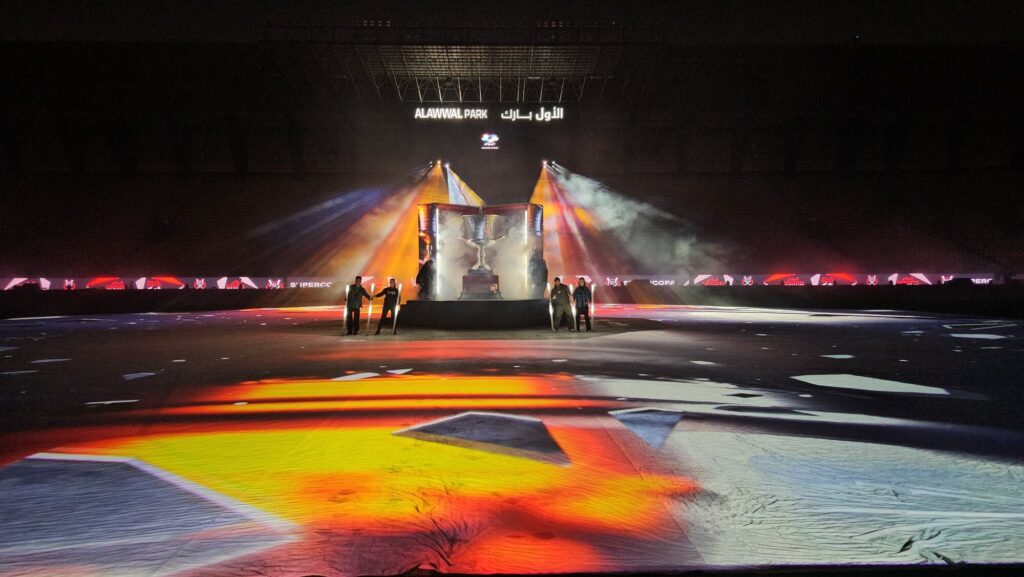
A simple object under the right light can feel important. A performer in silhouette can feel powerful. A pathway lit gradually can create anticipation. A single warm glow can create intimacy. A strong beam can make a reveal feel ceremonial.
In Dubai, lighting is essential for stage symbols because it tells the audience where to focus and how to feel. Without lighting, a symbol may disappear into the stage. With strong lighting direction, the symbol becomes the center of attention.
Lighting can help a symbol feel:
- Sacred
- Important
- Luxurious
- Emotional
- Dramatic
- Mysterious
- Celebratory
- Cinematic
- Cultural
- Futuristic
For luxury brand events, lighting should make symbols feel refined rather than excessive. A brand symbol, product, or gesture can feel more premium when it is revealed with restraint and precision.
The light should protect the meaning of the symbol.
Cultural Symbols Need Care and Context
Cultural symbols can carry deep meaning.
They should never be used only because they look beautiful. A cultural reference, gesture, object, pattern, sound, or costume detail should be handled with respect and context. The audience should feel that the symbol has been considered, not borrowed casually.
In Dubai, cultural ceremonies may reflect heritage, identity, hospitality, memory, place, or national pride. The symbol should support this meaning carefully.
Cultural symbol direction should consider:
- What the symbol represents
- Where it comes from
- How it will be shown
- Who performs it
- How the audience may read it
- Whether it is appropriate for the event
- How it connects to music and movement
- How modern production can support it respectfully
For cultural shows, symbols can strengthen emotional storytelling when they are used with purpose. They can help the audience feel connected to heritage without reducing it to decoration.
Meaning should lead the visual choice.
The Final Image Should Stay in Memory
A ceremony needs a final image.
It may be a stage formation, a reveal, a symbolic object lifted into light, a performer group in stillness, a closing gesture, a lighting change, or a full-stage visual moment. This final image gives the audience emotional closure.
In Dubai, final images are also important for event photography, media coverage, social content, and client recaps. A clear symbolic ending helps the ceremony feel complete.
A strong final image should feel:
- Resolved
- Clear
- Emotional
- Photogenic
- Connected to the opening
- Supported by music
- Easy to remember
- Suitable for the event tone
If the ceremony ends without a clear image, the audience may feel that the moment faded rather than concluded.
A symbol can give the ending shape.
Soul Kulture Builds Ceremony Meaning Through Visual Direction
Soul Kulture approaches ceremony entertainment through meaning, visual storytelling, movement, sound, and stage direction.
Before creating the ceremony, the purpose is understood. What is being opened, closed, launched, honored, or celebrated? What should the audience feel? What image should represent the event? What symbol can carry the message? How should performers move around it? How should lighting and music support it?
This approach can include:
- Ceremony concept development
- Stage symbol creation
- Gesture direction
- Formation planning
- Cultural symbol consideration
- Opening and closing moments
- Scenic object direction
- Lighting and sound coordination
- Performer movement
- Reveal planning
- Final image design
- Rehearsal direction
In Dubai, this helps ceremonies feel emotionally clear and visually memorable. The ceremony is not only performed. It is composed around meaning.
Soul Kulture considers how every visual detail supports the message, from the first cue to the final stage picture.
A Ceremony Becomes Stronger When Meaning Has a Shape
The strongest ceremonies give meaning a visible form.
They do not rely only on speeches, screens, or announcements. They use symbols, gestures, formations, objects, light, sound, and performance to help the audience feel the importance of the moment.
For events in Dubai, stage symbols can make ceremonies more emotional, more memorable, and more visually powerful. They help audiences understand the occasion and remember it clearly afterward.
A symbol gives the ceremony identity.
It creates a shared image.
It allows the event’s message to live beyond the moment itself.
Frequently Asked Questions
What are stage symbols in ceremonies?
Stage symbols are visual elements such as objects, gestures, formations, lighting, colors, or scenic details that carry meaning during a ceremony.
Why are symbols important in ceremonies?
Symbols help audiences understand the emotional message of a ceremony quickly and remember the moment more clearly.
What types of events can use stage symbols?
Opening ceremonies, closing ceremonies, cultural events, brand launches, corporate milestones, festivals, and institutional events can all use stage symbols.
Can a product become a stage symbol?
Yes. In a brand or product launch, the product can become the central symbol when it is revealed and framed with performance, lighting, and sound.
How should cultural symbols be used?
Cultural symbols should be used with care, context, respect, and clear connection to the event purpose.
How does Soul Kulture create ceremony symbols?
Soul Kulture creates ceremony symbols around event meaning, visual storytelling, performer movement, lighting, sound, cultural context, and final emotional memory.
Give your ceremony a clear visual meaning through symbols, performance direction, stage imagery, and emotional storytelling.
Explore Opening & Closing CeremoniesYou May Also Like
![MSC Naming Ceremony [image_alt_tag_value]](https://soulkultureevents.com/wp-content/uploads/2026/03/IMG_2266-1024x683.jpg)