Performance Direction Gives Corporate Milestones Emotional Weight in GCC & Middle East
A corporate milestone can be expressed with a number.
Ten years.
One hundred projects.
A major expansion.
A new headquarters.
A significant achievement.
A transformation completed.
The information may be simple, but the meaning behind it rarely is.
A milestone contains time, effort, people, change and ambition. When an event marks that moment, the creative challenge is not simply to announce what happened. It is to help the audience feel why it matters.
For corporate events in GCC & Middle East, live performance can give a milestone an emotional dimension that slides, speeches and statistics cannot create alone.
Within across the GCC & Middle East, performance direction can transform corporate history and future ambition into a live experience that feels human, purposeful and specific to the organization.
A Milestone Needs a Point of View
The first question should not be which performers to book.
It should be what the milestone means.
An anniversary may represent continuity.
A completed transformation may represent progress.
A new headquarters may represent expansion.
A major business achievement may represent collective effort.
Different meanings require different creative languages.
Corporate History Is Not Automatically a Story
A timeline is useful information, but reading every year chronologically does not necessarily create a compelling live experience.
Performance direction needs to identify the moments that changed the organization.
These may include:
- Founding
- Expansion
- Challenges
- Innovation
- People
- New markets
- Transformation
- Future ambition
The goal is not to include every fact.
It is to reveal the shape of the journey.
Performance Can Translate Abstract Ideas
Corporate language often contains concepts that are difficult to visualize.
Words such as growth, collaboration, resilience and transformation appear frequently.
Performance can make those ideas physical.
A group moving separately before forming one composition can suggest alignment.
A single movement motif that expands across the ensemble can suggest growth.
A scenic environment that changes during the performance can suggest transformation.
The audience sees the idea rather than only hearing the word.
The Event Should Not Feel Like an Advertisement
A corporate milestone is connected to a brand, but the performance does not need to repeat the logo constantly.
Excessive branding can reduce emotional impact.
Brand identity can appear more subtly through:
- Color
- Geometry
- Materials
- Music
- Movement
- Pacing
- Scenic language
This allows the event to remain unmistakably connected to the organization without turning every creative moment into an advertisement.
Employees Can Be Part of the Story Without Performing
A corporate milestone often belongs to the people who created it.
That does not mean employees need to be placed on stage as performers.
Their contribution can be represented through:
- Recorded voices
- Documentary material
- Photography
- Selected quotes
- Historical imagery
- Sound
- Visual content
Professional performers can then interpret the wider emotional story.
Music Gives Time an Emotional Shape
Music is particularly effective when a performance needs to move through several periods or ideas.
A score can begin with a small musical element and gradually develop into something larger.
Instrumentation can evolve.
Rhythm can increase.
A recurring theme can return in different forms.
This creates the feeling of progression without requiring the audience to read a detailed timeline.
Choreography Can Represent Collective Effort
Corporate achievements are rarely created by one person.
Ensemble movement can communicate this naturally.
Performers can begin in independent pathways and gradually connect.
Different groups can represent different phases or functions before joining one composition.
The choreography does not need to imitate office work.
It needs to express the underlying relationship between individual contribution and collective achievement.
Scenography Can Carry the Timeline
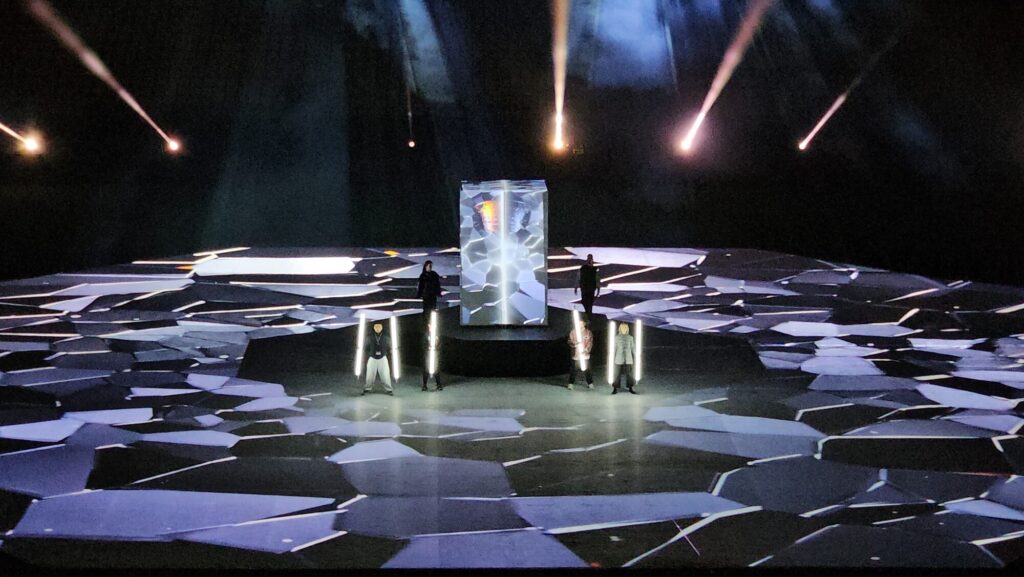
A customized live show may use physical scenic elements that transform throughout the performance.
Panels can open.
Platforms can connect.
A central structure can grow.
Lighting can reveal previously hidden layers.
The stage itself becomes evidence of progression.
This can communicate change more elegantly than presenting a sequence of dates on a screen.
Visual Content Should Be Selective
Corporate archives can contain thousands of photographs and videos.
Trying to show everything weakens the strongest material.
Creative direction should identify images that genuinely carry meaning.
A few carefully chosen historical moments can create more emotional weight than a rapid montage of dozens of unrelated photographs.
The Present Needs Its Own Moment
A milestone event should not spend all its time looking backward.
The audience is gathered in the present.
At some point, the performance needs to arrive there.
This can happen through a clear shift in:
- Music
- Lighting
- Costume
- Scenic state
- Movement
- Visual content
The transition tells the audience that the journey has reached the organization they know today.
The Future Should Feel Different From the Past
If the event also introduces future ambition, that section should not simply continue the historical language.
The future can feel more open.
Movement can become less literal.
Visual content can become more abstract.
Lighting can expand.
Music can introduce a new motif.
The production signals that what comes next has not been fully written.
Speakers Need to Belong to the Creative Flow
Corporate events often include leadership speeches.
Performance direction should consider how those speeches enter and leave the wider experience.
A speaker should not feel as though they interrupt the show.
Lighting, music and staging can create a controlled transition.
The stage may simplify before the speech.
A musical motif can resolve.
The speaker enters into an environment that already feels prepared.
Leadership Entrances Need Restraint
A senior executive does not necessarily need a dramatic performer-style entrance.
The appropriate tone depends on the organization and occasion.
Sometimes a simple lighting shift and musical cue create enough significance.
Creative direction should support leadership presence without making the moment feel theatrical for the wrong reasons.
Awards Can Become Part of the Narrative
Some milestone events also recognize employees, partners or achievements.
Awards sections can easily become repetitive.
Performance elements can create chapter transitions between groups of awards.
Music can distinguish categories.
Visual content can provide context.
The objective is to preserve momentum without distracting from the people being recognized.
Cultural Context Matters in GCC & Middle East
Corporate events in GCC & Middle East may bring together local leadership, international partners, employees and government stakeholders.
The creative language needs to understand that audience.
Music, movement, costume and staging should remain appropriate to the context while still feeling contemporary.
Localization should influence the experience from the beginning rather than being added at the end.
Cultural References Need a Reason
A corporate milestone may have a strong relationship with local history or national development.
In that case, a cultural show can provide meaningful creative language.
But cultural performance should not be inserted automatically.
The connection should be clear.
Perhaps the organization has grown alongside a city.
Perhaps local craft influenced the brand.
Perhaps the milestone represents a contribution to a wider national ambition.
The cultural reference then has a purpose.
Scale Should Match the Achievement
A major anniversary does not automatically require hundreds of performers.
Scale should reflect the creative idea and venue.
A smaller ensemble can create intimacy.
A large cast can communicate collective achievement.
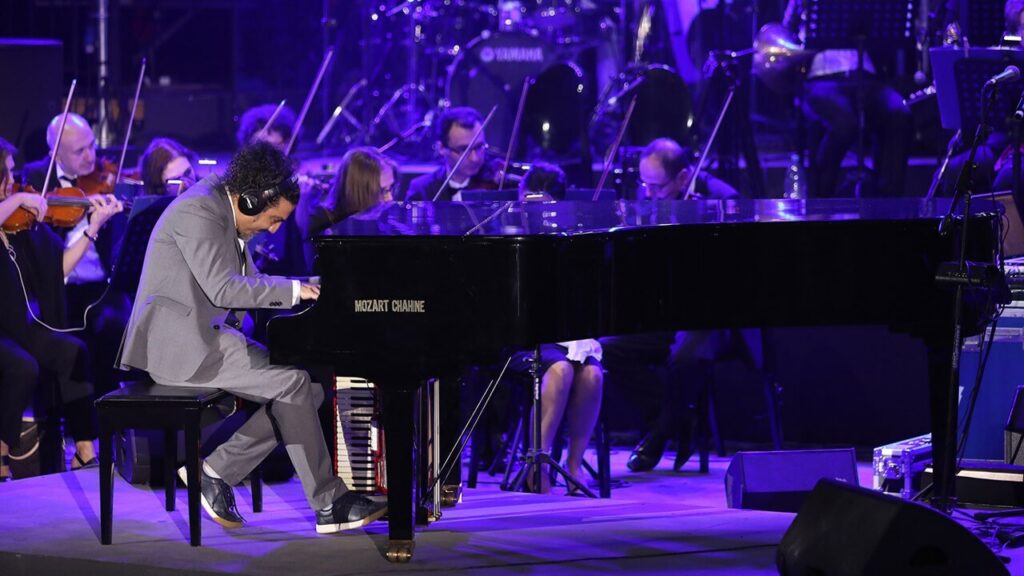
A single musician can sometimes carry more emotional weight than a complex technical sequence.
The right scale is the one that makes the milestone feel meaningful.
Corporate Language Needs Translation
Internal corporate terminology can be difficult for performers and audiences to connect with emotionally.
Creative teams need to translate it.
Instead of staging “operational excellence,” the performance might explore precision.
Instead of staging “strategic alignment,” it might explore convergence.
Instead of staging “growth,” it might explore expansion.
The concept becomes something that can actually exist on stage.
Technical Design Should Support the Narrative
Screens, lighting, automation and projection can give the event scale.
They should still follow the story.
A technical effect has greater impact when it arrives because the narrative needs it.
If every scene contains the maximum level of technology, the milestone can lose emotional clarity.
Restraint creates hierarchy.
The Venue Can Reflect Corporate Character
A corporate event does not always need a conventional ballroom stage.
Architecture can influence the creative approach.
An industrial venue may suit a company connected to engineering.
A cultural location may support an organization with a strong relationship to heritage.
A contemporary architectural environment may reinforce transformation or innovation.
The venue becomes part of the message.
Rehearsal Protects Formal Moments
Corporate programs often contain exact timings.
Executives may have limited availability.
Awards need specific sequencing.
Video playback needs to align with speeches.
Performers need to enter around these fixed elements.
Rehearsal is therefore not only for the entertainment.
It protects the complete program.
Camera Direction Matters
Milestone events are often documented for internal communications, media and future brand content.
The performance should be designed with camera coverage in mind.
Important visual compositions need clear angles.
Lighting should work for both the room and cameras.
Performers should understand where key moments will be captured.
Documentation becomes part of the event’s longer life.
The Finale Should Belong to Everyone
A corporate milestone can easily end by focusing only on leadership.
A stronger finale may communicate collective ownership.
Performers, visual content, music and the final message can bring the organization together symbolically.
The audience should feel that the milestone belongs to the people who contributed to it.
Corporate Conferences Can Carry Performance Differently
Not every milestone has its own standalone event.
Sometimes it appears inside a conference, leadership meeting or annual gathering.
In those situations, corporate conferences and seminars can incorporate a concise performance moment without changing the entire format of the program.
The creative intervention might open the day, introduce a major announcement or close a key chapter.
Its length can remain controlled while its meaning stays significant.
Emotion Does Not Make the Event Less Professional
Corporate events sometimes avoid emotional storytelling because they fear becoming sentimental.
Professionalism and emotion are not opposites.
A precise, restrained performance can communicate pride without exaggeration.
Music can create reflection.
Movement can create unity.
Visual content can remind people of real achievements.
The tone depends on direction.
The Milestone Needs Specificity
A generic corporate performance can be moved from one company to another.
A milestone production should not.
Its creative structure should respond to:
- The organization’s history
- Its people
- Its achievement
- Its visual identity
- Its future
- The event environment
Specificity is what makes the performance credible.
A Shared Moment in GCC & Middle East
Corporate milestones in GCC & Middle East increasingly take place within sophisticated event environments where audiences expect more than a sequence of presentations.
Performance can add another layer without replacing the formal purpose of the occasion.
The milestone remains clear.
The achievement remains central.
The creative direction simply gives the audience a way to feel the journey behind it.
A number tells people how many years have passed.
A performance can remind them what those years contained.
Frequently Asked Questions
How can live performance support a corporate milestone?
Performance can translate the organization’s journey, achievement and future ambition into movement, music, scenography and visual storytelling.
Does a corporate anniversary need a large performance?
No. The appropriate scale depends on the milestone, venue, audience and creative idea.
Can company history be included without creating a long timeline?
Yes. Creative direction can select the most meaningful turning points and interpret them through performance and visual content.
Should employees perform during a corporate milestone?
Not necessarily. Employee voices, images and stories can be incorporated while professional performers deliver the live creative elements.
Can a milestone performance fit inside a conference?
Yes. A concise customized performance can open, transition or close an important conference chapter.
Give your corporate milestone a live creative identity built around achievement, people, and the journey behind the moment.
Explore Corporate Conferences & SeminarsYou May Also Like