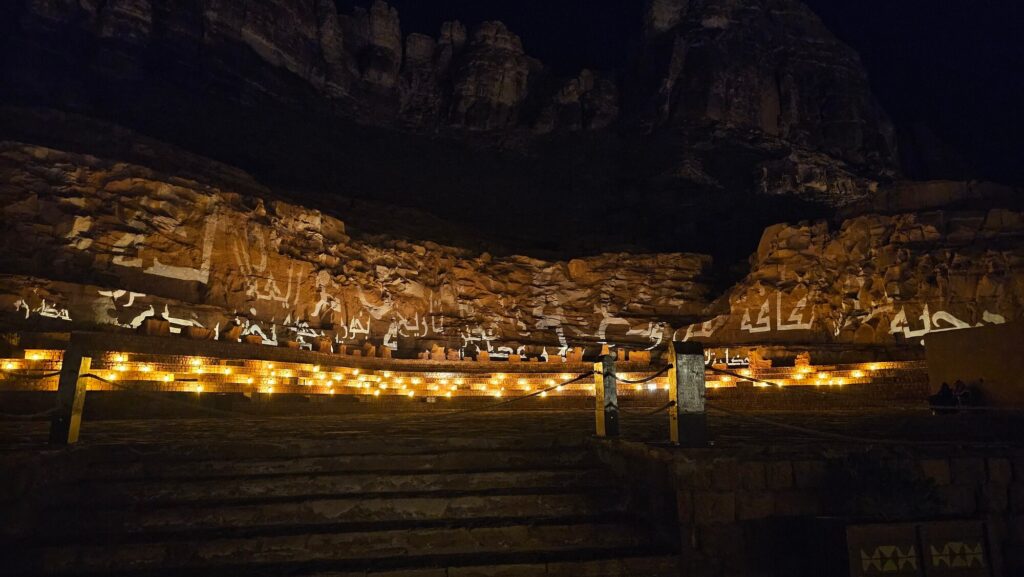
Inside Interactive and Immersive Event Experiences in GCC & Middle East
An immersive event does more than give an audience something to watch.
It changes the environment around them.
Light may respond to movement. Projection can extend beyond a conventional screen. Sound can appear to travel through a venue. Performers may move between physical and digital environments. Scenography can change as the experience develops.
These elements create a different relationship between entertainment and space.
Instead of placing a performance at one end of a room and positioning the audience opposite it, immersive entertainment can make the entire environment part of the creative concept.
For events in GCC & Middle East, this approach offers opportunities across launches, cultural programs, destination experiences, corporate events and theatrical productions where the objective is to create a stronger sense of place and atmosphere.
Within across the GCC & Middle East, interactive and immersive entertainment works best when technology, performance and scenography are treated as parts of one creative language rather than individual attractions.
Immersion Begins With the Environment
An immersive experience does not necessarily require complicated technology.
The first requirement is an environment with a clear creative identity.
When guests enter, they should feel that the atmosphere has changed.
That transformation may come through:
- Lighting
- Sound
- Projection
- Scenography
- Architecture
- Performance
- Spatial design
- Material
- Movement
Each layer supports the same world.
A room filled with screens is not automatically immersive.
If every screen contains unrelated content and the performers appear disconnected from it, the audience still experiences separate production elements.
Immersion comes from coordination.
Interactive and Immersive Are Not the Same Thing
These terms are often used together, but they describe different ideas.
Immersive entertainment surrounds the audience with a designed environment.
Interactive entertainment allows something in the experience to respond to input or action.
An event can be immersive without being highly interactive.
A theatrical projection environment may surround an audience completely while remaining carefully choreographed from beginning to end.
An interactive installation, on the other hand, may change when someone approaches it or performs a specific action.
Many events combine both approaches.
The important question is not how interactive the technology can become.
It is what kind of experience the event needs.
Technology Needs a Creative Purpose
Interactive systems can easily become demonstrations of technology rather than entertainment.
A sensor responds.
A screen changes.
A projection moves.
The audience understands that something technical happened, but the moment does not communicate anything meaningful.
Technology should have a role within the concept.
It might:
- Reveal part of a story
- Transform the environment
- Direct attention
- Extend a performer’s movement
- Introduce a new scene
- Visualize a brand idea
- Connect separate areas
- Create a sense of progression
When the purpose is clear, the technical response becomes part of the experience instead of a novelty.
Projection Can Change the Perception of Space
Projection offers one of the most flexible tools in immersive production.
Content is not restricted to rectangular screens.
It can appear across:
- Walls
- Floors
- Columns
- Architectural surfaces
- Scenic objects
- Fabric
- Sculptural forms
This allows a venue to change visually without rebuilding its physical architecture.
A stone wall can appear to dissolve.
A floor can become part of the visual composition.
A scenic object can shift through multiple visual identities during one performance.
For interactive and immersive experiences, projection becomes most effective when content is designed around the actual surfaces rather than simply enlarged to cover them.
Physical Scenography Still Matters
Digital technology does not eliminate the need for physical design.
In many cases, physical scenery makes an immersive environment more convincing.
Projection has surfaces to interact with.
Lighting has materials to reveal.
Performers have levels and structures to move through.
The audience experiences real depth rather than only digital imagery.
Scenography can include:
- Architectural frames
- Sculptural forms
- Textured surfaces
- Platforms
- Fabric
- Kinetic elements
- Reflective materials
Digital and physical layers can then reinforce each other.
Performers Give the Environment a Human Scale
Technology can transform a room.
Performers can make that transformation feel human.
A dancer moving through projection gives the audience a reference for scale.
A musician can make a digital environment feel emotionally grounded.
A theatrical character can guide attention through an unfamiliar space.
An ensemble can reveal how architecture is meant to be experienced.
This relationship becomes especially important when an immersive concept risks feeling too abstract.
The performer gives the audience something human to follow.
Movement Can Influence Digital Content
One of the strongest opportunities in interactive performance is creating a visible relationship between human movement and digital response.
A performer’s gesture might trigger light.
Movement could distort a projection.
The position of a performer could alter visual content.
Several performers could create different responses depending on their formation.
The result should still look choreographed.
Technology needs enough control that the response supports the performance rather than becoming unpredictable visual noise.
The audience should feel a relationship between cause and effect.
Sound Creates Invisible Architecture
Immersive design is often discussed visually, but sound can be equally important.
Traditional event audio may appear to come primarily from the stage.
Immersive sound can create a different perception.
A sound may begin behind the audience.
Another may travel across the room.
A voice can appear distant and then become close.
Music can expand from a focused source into the full venue.
This creates invisible spatial movement.
For productions in GCC & Middle East, sound can also incorporate contemporary composition, regional musical references and atmospheric textures that strengthen the relationship between the experience and its setting.
Lighting Can Guide the Journey
Immersive environments often contain more visual information than conventional stages.
The audience needs guidance.
Lighting can create that hierarchy.
A darkened area suggests that it is not yet important.
A narrow light can reveal the next point of focus.
A gradual environmental shift can indicate that the experience is entering another chapter.
Lighting can therefore function almost like editing in cinema.
It decides what becomes visible and when.
The Audience Does Not Need to Perform
One misconception about interactive experiences is that guests must constantly participate.
That is not necessary.
Many audiences prefer to observe.
A sophisticated interactive environment can respond subtly without asking every guest to complete an activity.
The interaction may happen through:
- Presence
- Location
- Collective movement
- Environmental sensors
- Scheduled triggers
- Performer actions
This is particularly useful at premium corporate or cultural events where forced participation may feel inappropriate.
The experience remains responsive without making guests feel pressured.
Narrative Prevents Technology From Feeling Random
Immersive experiences can contain many creative possibilities.
Without structure, those possibilities can become overwhelming.
Narrative creates direction.
The experience might move through three stages:
- Introduction: Establish the environment and central idea
- Transformation: Allow performance, technology and scenography to evolve
- Resolution: Bring the different creative layers into one final state
This structure does not need spoken narration.
The audience can understand progression through sound, visual change, movement and atmosphere.
Brand Stories Can Become Physical Environments
Brand events often explain concepts through screens and presentations.
Immersive entertainment provides another possibility.
The brand idea can become spatial.
A technology company might create an environment built around connection.
A luxury brand could focus on material, craftsmanship and controlled movement.
A destination may use landscape, sound and architectural references.
A product launch can gradually reveal the characteristics of the product through light, movement and visual transformation.
For brand and product launch entertainment, this can make the launch feel less like a presentation and more like a complete creative experience.
Cultural Stories Need More Than Digital Decoration
Cultural content can also benefit from immersive techniques.
But technology should not replace research.
A cultural pattern projected across a wall is still only decoration if it has no relationship with the story.
Cultural immersive experiences can draw from:
- Architecture
- Oral history
- Music
- Movement
- Craft
- Landscape
- Language
- Material
- Historical narratives
These elements can then influence digital content and performance.
Technology becomes a contemporary method for interpreting cultural material rather than a substitute for it.
Architecture Can Become Part of the Content
Immersive entertainment is especially powerful in architecturally distinctive venues.
Instead of covering the building, creative direction can respond to it.
A staircase can become a performance level.
Columns can structure projection.
A façade can become a visual canvas.
A long corridor can create progression.
A ceiling can introduce an unexpected visual layer.
This approach allows the experience to feel specific to the location.
It could not simply be copied into another venue without changing.
Multiple Spaces Can Form One Journey
An immersive experience does not always need to happen in one room.
Guests may move through a sequence of environments.
For example:
- An atmospheric arrival
- A transitional corridor
- A visual installation
- A central performance environment
- A final reveal or destination
Each space can introduce another layer of the concept.
Sound and visual motifs can connect them.
This structure can be particularly effective for destination events and large cultural experiences in GCC & Middle East, where venues may include several indoor and outdoor zones.
Timing Is Essential
Interactive technology may appear spontaneous, but the production still requires precise timing.
Performers need to know when digital content changes.
Lighting needs to anticipate movement.
Sound needs to align with visual cues.
Technical systems need response thresholds.
Stage management needs to understand contingency scenarios.
The experience should feel fluid to the audience because the work behind it is controlled.
Technical Reliability Protects Immersion
Immersion is fragile.
If a major projection freezes or an interactive system responds incorrectly, the audience can immediately become aware of the technology behind the experience.
Redundancy and testing are therefore essential.
Production planning may need to consider:
- Backup playback
- Spare sensors
- Network stability
- Power redundancy
- Manual overrides
- Alternative cues
- Calibration time
- Technical monitoring
The audience should experience the creative result, not the infrastructure supporting it.
Rehearsal Needs the Full System
An immersive show cannot be properly rehearsed by separating every department until the final day.
The relationships need testing.
A performer’s position may not align with projection.
A lighting cue may reduce sensor visibility.
Sound may create a different effect once the room is full.
Projection brightness may need adjustment.
A physical scenic object may cast an unexpected shadow.
Full-system rehearsals reveal these relationships.
Cameras Add Another Perspective
Some immersive experiences are also filmed or streamed.
This creates an additional challenge.
A projection may look spectacular to the eye but flicker on camera.
Dark atmospheric lighting may need adjustment for broadcast.
A visual illusion designed for one audience viewpoint may not work from another angle.
The production should understand early whether cameras are part of the experience.
Restraint Makes Immersion Stronger
Immersive production offers many tools.
That does not mean every tool should appear simultaneously.
Projection.
Lasers.
Screens.
Interactive sensors.
Performers.
Kinetic scenery.
Lighting.
Sound.
Used without hierarchy, these elements can compete.
One scene may be driven primarily by movement.
Another may belong to projection.
Another may become almost completely dark except for sound.
Contrast allows each technique to feel more powerful.
Immersion Needs Emotional Direction
The strongest question is not:
What can the technology do?
It is:
What should the audience feel?
Possible emotional goals include:
- Curiosity
- Anticipation
- Wonder
- Pride
- Intimacy
- Discovery
- Transformation
Once the emotion is understood, technology can be selected accordingly.
A quiet responsive light may be more effective than a spectacular projection if intimacy is the goal.
A large environmental transformation may be appropriate when the moment needs scale.
The Final Moment Should Resolve the Environment
An immersive experience needs an ending.
The environment may gradually simplify.
Several visual layers may converge.
A performer may return.
The sound may resolve.
The entire venue might move into one final lighting state.
This gives the audience a clear final image.
Without resolution, an immersive environment can feel as though it simply stopped operating.
A Different Relationship With the Audience
Traditional performance creates a clear separation.
There is a show.
There is an audience.
Immersive entertainment can soften that boundary.
The audience still does not need to become the performer.
But they can exist inside the same creative environment as the performance.
Light surrounds them.
Sound moves around them.
Architecture changes around them.
Performers may appear much closer than expected.
For events across GCC & Middle East, this creates opportunities to build entertainment that feels highly specific to the occasion, location and creative objective.
The result is not simply a larger show.
It is a different way of experiencing one.
Frequently Asked Questions
What makes an event experience immersive?
Immersive experiences use coordinated elements such as space, scenography, lighting, sound, projection and performance to surround the audience with one creative environment.
Does immersive entertainment require audience participation?
No. Audiences can remain observers while the environment responds subtly to presence, movement, performers or programmed triggers.
What is the difference between interactive and immersive entertainment?
Immersive entertainment surrounds the audience with a designed environment, while interactive entertainment includes elements that respond to input or action. An experience can use either approach or combine both.
Can immersive entertainment work for corporate events?
Yes. It can be used for launches, brand storytelling, conferences, destination events and other corporate experiences when the creative concept supports the event objective.
Why are rehearsals important for immersive productions?
Projection, sensors, performers, lighting, sound and physical scenery need to work together, so full-system rehearsal is essential for timing and technical reliability.
Create an environment where performance, technology, scenography, and storytelling come together as one immersive experience.
Explore Interactive & Immersive ExperiencesYou May Also Like
![Billboard Event [image_alt_tag_value]](https://soulkultureevents.com/wp-content/uploads/2026/03/20241212_001617-1024x768.jpg)