Ceremony Narration Gives Live Events a Human Voice in GCC & Middle East
A ceremony can be visually impressive, but visuals alone do not always explain the emotional meaning of the moment.
The audience may see performers, lights, screens, music, movement, and stage images, but they still need a human thread that connects everything. Ceremony narration provides that thread. It gives the event a voice. It helps the audience understand what the moment represents, why it matters, and how they should feel as the program unfolds.
Narration is not only a voiceover.
It is part of the ceremony’s emotional structure.
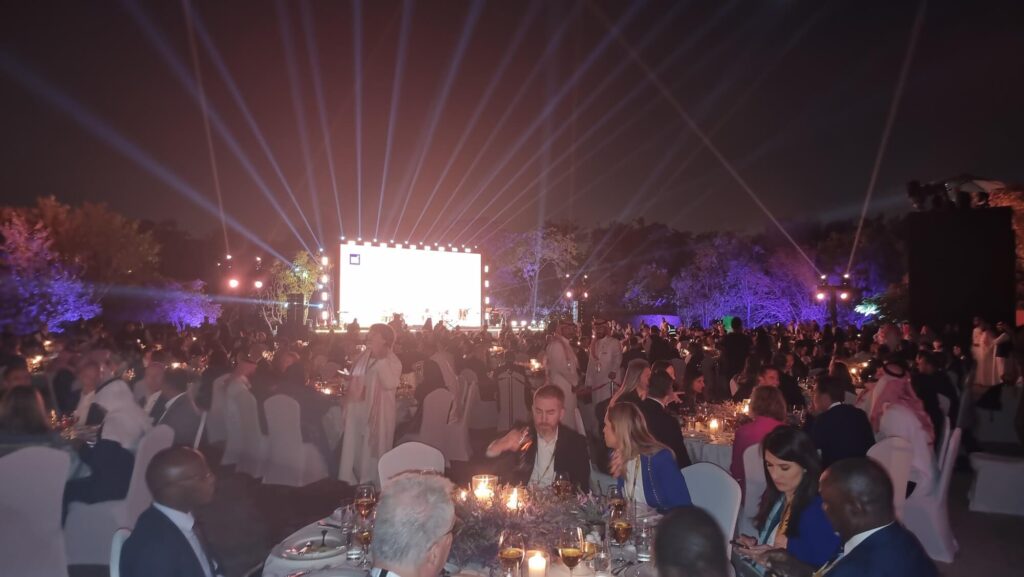
In GCC & Middle East, ceremonies are becoming larger, more polished, and more experience-led. Opening and closing moments are expected to feel cinematic, meaningful, and easy to follow. A ceremony may celebrate a milestone, introduce a major event, honor a legacy, launch an initiative, welcome guests, or close a festival. In each case, narration can help shape the emotional journey.
For opening and closing ceremonies, narration can connect the visual world to the event message. It can give context to symbolic movement, support transitions, introduce key moments, and bring warmth to a large-scale production.
Soul Kulture creates ceremony experiences across the GCC & Middle East, helping events in GCC & Middle East build emotional clarity through narration, storytelling, performance direction, music, staging, and show flow.
A strong ceremony should not only be watched.
It should be understood and felt.
The Voice Creates Emotional Context
A spoken line can change the meaning of a visual moment.
A performer crossing the stage may look beautiful, but narration can explain whether the movement represents arrival, memory, progress, unity, or celebration. A lighting reveal may look dramatic, but narration can give it purpose. A closing image may feel emotional, but the right words can help the audience understand why it matters.
In GCC & Middle East, where ceremonies may include guests from different backgrounds, clear narration can help bring everyone into the same emotional space. It does not need to over-explain. It simply needs to guide.
Narration can create context for:
- Event openings
- Legacy stories
- Cultural moments
- Brand milestones
- National or institutional themes
- Awards
- Festivals
- Public celebrations
- Closing moments
- Performer transitions
- Visual symbols
- Final messages
For cultural festival production, narration can help connect heritage, performance, and audience understanding. It can introduce the cultural meaning of a moment without making the show feel like a lecture.
The right voice can make a large ceremony feel more personal.
Scriptwriting Shapes the Audience Journey
Ceremony narration begins with writing.
The script needs to understand the event purpose, audience, tone, timing, cultural context, and emotional direction. A script for a luxury brand ceremony should not sound like a public festival script. A cultural ceremony should not sound like a corporate award night. A closing moment should not sound like an opening welcome.
In GCC & Middle East, scriptwriting matters because ceremonies often need to feel formal without becoming heavy, emotional without becoming exaggerated, and clear without becoming too simple.
A ceremony script should consider:
- The purpose of the event
- The audience profile
- The level of formality
- The key messages
- The emotional arc
- The timing of spoken lines
- The relationship between voice and visuals
- Language choices
- Cultural sensitivity
- The final memory
For corporate and luxury event entertainment, script tone is especially important. The language should feel polished and suitable for the room. It should support the event’s prestige without sounding cold or generic.
A strong script does not simply describe what is happening.
It gives the moment meaning.
Narration Should Not Say Too Much
One of the biggest mistakes in ceremony narration is over-writing.
If the narration explains every visual, the audience has no room to feel. If the voice speaks constantly, the ceremony can become heavy. If the words repeat what the audience already sees, the narration loses value.
In GCC & Middle East, high-end events often benefit from restraint. A few strong lines can create more impact than a long speech. Narration should leave space for music, performance, silence, applause, and visual emotion.
Good narration knows when to speak and when to stop.
It should support:
- The beginning
- Major transitions
- Symbolic moments
- Emotional peaks
- Key introductions
- Final reflection
It should not cover every second.
For customized live shows, this balance is important because the audience needs to experience the performance, not only listen to explanation. Words should guide the show, not dominate it.
Silence can be part of the script.
The Voice Talent Matters
The voice behind the narration changes how the message feels.
A deep voice may create authority. A warm voice may create intimacy. A calm voice may create elegance. A dynamic voice may create energy. A bilingual voice may help connect different audiences. A poetic voice may support a cultural or artistic event.
In GCC & Middle East, choosing the right voice talent is part of the creative direction. The voice should match the event’s personality. A voice that feels too dramatic for a luxury dinner can sound artificial. A voice that feels too casual for a ceremony can reduce the importance of the moment.
Voice direction should consider:
- Tone
- Pace
- Accent
- Language
- Emotional control
- Pronunciation
- Formality
- Warmth
- Cultural fit
- Recording quality
- Live or pre-recorded delivery
For luxury brand events, voice talent should feel refined and controlled. The narration should sound like part of the brand world, not an external announcement.
The voice becomes part of the event identity.
Language Choice Affects Connection
Ceremony narration may need one language, two languages, or a carefully blended approach.
Language choice should be based on the audience, event purpose, cultural context, and location. In GCC & Middle East, events may include local guests, regional audiences, international visitors, corporate leaders, families, VIPs, or public attendees. The narration should be accessible without making the ceremony feel repetitive.
Bilingual narration can be powerful when handled with rhythm. The two languages should not feel like duplicated blocks every time. They can be used strategically, with some lines in one language, some in another, and key messages repeated when necessary.
Language planning should consider:
- Audience understanding
- Emotional tone
- Cultural respect
- Timing
- Script length
- Voice talent
- Screen text support
- Live host delivery
- Ceremony rhythm
For cultural or official events, language can carry identity. The choice of words should feel respectful and precise.
A ceremony’s voice should sound like it belongs to the people in the room.
Narration Works With Music
Narration and music must be planned together.
The voice needs space to be heard clearly. Music can support emotion, but it should not overpower the words. A soft underscore can make narration feel cinematic. A pause in music can make a line feel important. A musical rise after narration can carry the audience into the next visual moment.
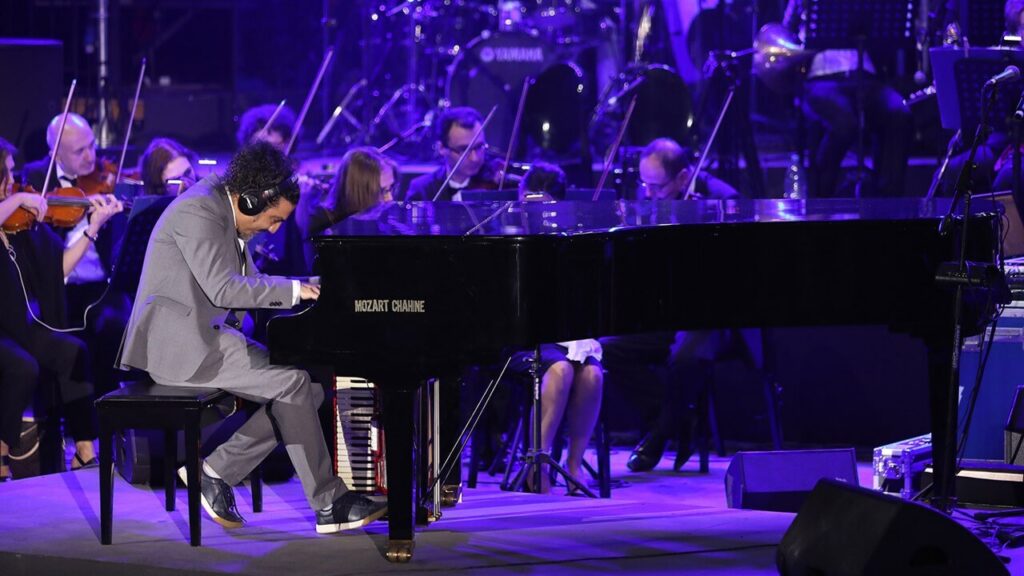
In GCC & Middle East, many ceremonies use live music, orchestral scores, cultural instruments, cinematic tracks, or ambient sound design. The narration should fit within that sound world.
Music and narration can work together through:
- Underscoring
- Timed pauses
- Emotional builds
- Voice entrances
- Final line support
- Transition cues
- Reveal moments
- Closing fades
For musical productions, narration can become part of a larger sound identity. Spoken words, music, and performance can feel like one complete composition.
The voice should not fight the music.
It should ride with it.
Narration Helps Transitions Feel Smooth
Ceremonies often move through different sections.
There may be an opening welcome, a performance, a screen film, a symbolic moment, a speech, a reveal, a group performance, a tribute, and a closing image. Without narration or clear verbal transitions, these sections can feel separate.
Narration can connect them.
In GCC & Middle East, this is especially useful for ceremonies with complex programs. The audience should not feel confused about why one moment follows another. A short line can bridge scenes and keep the emotional thread clear.
Narration can help transition from:
- Arrival atmosphere to opening
- Opening visuals to live performance
- Performance to speech
- Speech to symbolic moment
- Video to stage reveal
- Ceremony to celebration
- Main event to closing
- Final image to farewell
The best transitions feel natural.
Narration can make the ceremony feel composed instead of assembled.
Live Hosts and Voiceover Can Work Together
Ceremony narration does not always need to come from one source.
A live host can welcome guests and manage formal moments, while a recorded voiceover can carry poetic or cinematic sections. A narrator can introduce the emotional story, while a host handles practical details. A performer can deliver a line live, while the voiceover supports transitions.
In GCC & Middle East, this hybrid approach can be useful for high-level events. It allows the ceremony to feel both human and cinematic.
The key is consistency.
The live host, voiceover, script, music, and visual direction should all feel part of the same event language. If the host sounds casual and the voiceover sounds overly dramatic, the ceremony may feel uneven.
A clear narration plan decides:
- Who speaks
- When they speak
- What tone they use
- How long each section lasts
- How the words connect to visuals
- How the audience receives the message
The ceremony voice should feel unified.
Soul Kulture Builds Ceremony Narration Around Meaning
Soul Kulture approaches ceremony narration as part of the full creative structure of the event.
Before writing or directing the voice, the ceremony message is defined. What is being celebrated? What does the opening need to communicate? What should the closing leave behind? What should the audience understand? What should they feel? How should words support the visuals, music, movement, and stage symbols?
This approach can include:
- Ceremony scriptwriting
- Voiceover direction
- Host scripting
- Bilingual narration planning
- Emotional pacing
- Cultural story support
- Opening and closing messages
- Music and narration timing
- Transition writing
- Spoken word moments
- Voice talent selection
- Rehearsal and cue planning
In GCC & Middle East, this helps ceremonies feel clear, emotional, and polished. The narration is not added at the end. It is built into the event’s structure.
Soul Kulture considers how every word affects the audience journey.
The Right Words Stay With the Audience
A ceremony may be remembered through its visuals, but the right words can stay with the audience long after the event ends.
A clear opening line can set the tone. A thoughtful transition can help the audience understand the meaning of a performance. A final sentence can give the ceremony emotional closure. The voice of the ceremony becomes part of the memory.
For events in GCC & Middle East, narration can make a ceremony feel more human and more meaningful. It can connect large-scale visuals to personal emotion. It can give cultural or brand messages more clarity. It can help audiences feel included in the importance of the moment.
Strong narration does not need to be long.
It needs to be right.
When words, music, movement, and visuals work together, the ceremony gains a voice that feels clear, emotional, and memorable.
Frequently Asked Questions
What is ceremony narration?
Ceremony narration is the spoken voice, script, or voiceover that guides the audience through the meaning, transitions, and emotional moments of a ceremony.
Why is narration important in ceremonies?
Narration gives context, supports emotional clarity, connects visual moments, and helps the audience understand the purpose of the event.
Can ceremony narration be bilingual?
Yes. Bilingual narration can work well when planned with rhythm, audience understanding, cultural context, and script timing.
Should narration be live or recorded?
It can be live, recorded, or both, depending on the event style, technical needs, host role, and desired emotional tone.
How does music support narration?
Music can underscore spoken lines, create emotion, support pauses, and carry the audience into the next ceremony moment.
How does Soul Kulture approach ceremony narration?
Soul Kulture builds narration around event meaning, scriptwriting, voice direction, music timing, language planning, transitions, and emotional impact.
Give your ceremony a clear human voice through narration, scriptwriting, emotional pacing, and spoken storytelling.
Explore Opening & Closing CeremoniesYou May Also Like
![Six Flags theme park [image_alt_tag_value]](https://soulkultureevents.com/wp-content/uploads/2026/03/Untitled-design-2-1024x787.jpg)