Lighting Direction Gives Live Events Their Emotional Language in GCC & Middle East
Before a guest understands the full concept of an event, they feel the atmosphere.
Lighting plays a major role in that first feeling. It can make a space feel intimate, grand, mysterious, luxurious, ceremonial, warm, dramatic, futuristic, or emotional before a single performer appears. The audience may not always notice why they feel a certain way, but light has already shaped their reaction.
Lighting direction is not only a technical layer.
It is an emotional language.
In GCC & Middle East, live events are becoming more visual, more cinematic, and more experience-led. Guests expect an atmosphere that feels intentional from the first moment. Whether the event is a gala dinner, opening ceremony, brand launch, luxury experience, festival, corporate gathering, or destination event, lighting helps define the mood and guide attention.
For opening and closing ceremonies, lighting is especially important because the audience needs to feel scale, importance, and emotional progression. The event should not only begin or end with a performance. It should feel like the room, stage, and audience are moving together toward a meaningful moment.
Soul Kulture creates visually directed live event experiences across the GCC & Middle East, helping events in GCC & Middle East build atmosphere, focus, emotion, and performance impact through lighting, movement, staging, and show direction.
A strong event is not only seen.
It is felt through the way it is lit.
Atmosphere Begins With Darkness and Light
Lighting direction is not only about brightness.
It is also about darkness.
A dark space can create anticipation. A soft glow can create intimacy. A sudden reveal can create excitement. A slow lighting build can make the audience feel that something important is approaching. A controlled shadow can make a performer feel more powerful than a fully lit stage.
In GCC & Middle East, where events often need to feel premium and carefully produced, the balance between light and darkness matters. Too much light can flatten the atmosphere. Too little light can hide the experience. The right balance creates depth.
Lighting can define:
- The emotional temperature of the room
- The focus of the audience
- The level of formality
- The sense of scale
- The feeling of luxury
- The timing of a reveal
- The transition between event moments
- The mood of a performance
- The final memory of the night
A beautiful venue can feel ordinary if the lighting is flat.
A simple venue can feel cinematic when the lighting is directed with purpose.
Light Guides Attention Without Explanation
An audience needs to know where to look.
In a live event, there may be performers, speakers, screens, tables, entrances, décor, guests, camera crews, and moving elements all competing for attention. Lighting helps organize that visual information. It tells the audience what matters in each moment.
In GCC & Middle East, this is especially valuable for events with complex programs. A corporate ceremony may move between speeches, performances, videos, awards, and transitions. A brand launch may need to guide attention from the audience to the stage, then to a product reveal. A gala dinner may need subtle shifts that support music, dining, and entertainment without feeling disruptive.
Lighting can guide focus through:
- Spotlights
- Stage washes
- Accent lighting
- Pathway lighting
- Backlighting
- Silhouette effects
- Table atmosphere
- Screen support
- Performer highlights
- Reveal lighting
- Controlled blackouts
For brand and product launch entertainment, lighting can make a reveal feel more intentional. The product should not simply appear. It should be framed, anticipated, and visually protected. Light helps create that sense of importance.
The audience does not need to be told where to look.
Good lighting already tells them.
Color Creates Emotional Meaning
Color changes the feeling of a space immediately.
Warm tones can make an event feel welcoming, elegant, and human. Cool tones can feel futuristic, calm, premium, or mysterious. Deep colors can create drama. Soft colors can create romance. Gold can suggest ceremony or luxury. White can suggest clarity and precision. Purple, blue, red, amber, and green can all carry very different emotional messages depending on how they are used.
In GCC & Middle East, color direction should never be random. A lighting palette should connect to the event concept, brand identity, cultural tone, venue style, performer costumes, floral design, screen visuals, and audience journey.
Color can support:
- Luxury atmosphere
- Brand identity
- Cultural mood
- Performance energy
- Dinner ambience
- Ceremony emotion
- Festival excitement
- Destination setting
- Photography and video content
For luxury brand events, lighting color needs discipline. Luxury does not always mean dark lighting or gold tones. It means control, refinement, and consistency. The lighting should support the brand world without making the room feel overdesigned.
Color should feel intentional.
When it does, the whole event feels more polished.
Lighting Creates Depth in the Venue
A venue can look flat when everything is lit the same way.
Depth comes from layers. Some areas need to be brighter. Some areas need to stay soft. Some objects need highlights. Some backgrounds need texture. Some corners need glow. Some moments need shadow.
This layering makes the venue feel more complete.
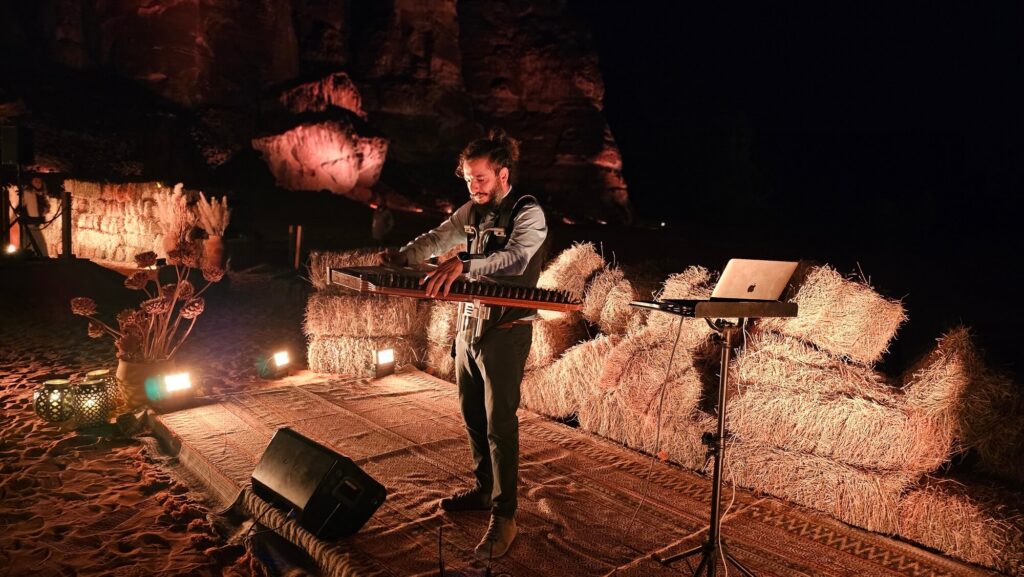
In GCC & Middle East, event venues can include ballrooms, outdoor landscapes, hotel terraces, cultural spaces, stadiums, private estates, and temporary structures. Each space needs a different lighting approach. A ballroom may need warmth and controlled elegance. A desert setting may need lighting that respects the natural darkness. A stage may need strong contrast. A dinner setting may need intimacy.
Lighting depth can be built through:
- Uplighting
- Backlighting
- Table lighting
- Stage depth
- Wall texture
- Pathway glow
- Scenic highlights
- Performer silhouettes
- Screen brightness balance
- Architectural accents
Depth makes the space feel alive.
It allows guests to feel that the environment has been shaped, not simply illuminated.
Performance Needs Lighting That Moves With It
Live performance and lighting should not feel separate.
A dancer, musician, theatrical performer, aerial act, host, or ceremonial group needs lighting that understands movement. If the performer moves but the light stays flat, the performance loses energy. If the lighting changes too quickly without supporting the action, the audience may feel distracted.
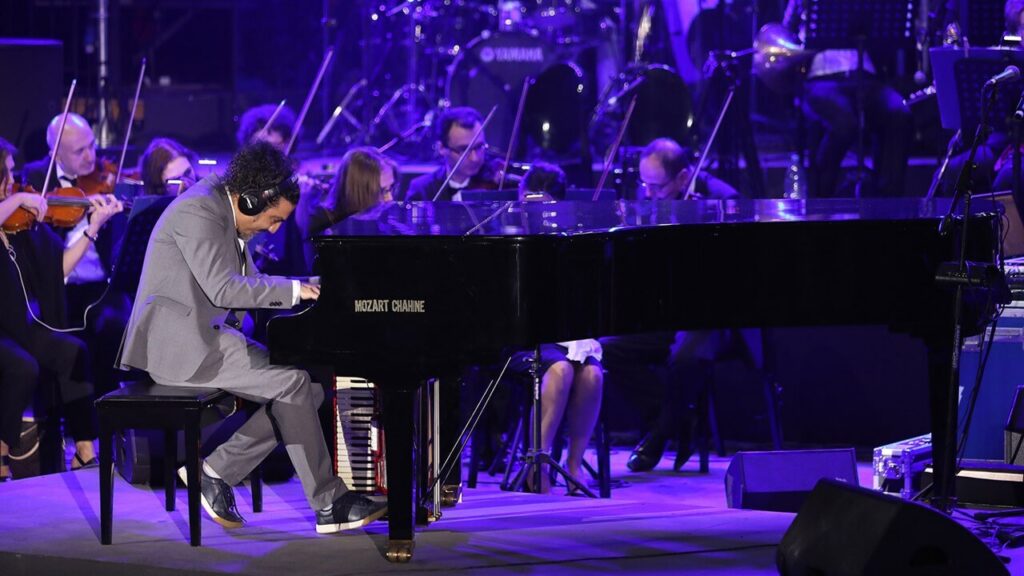
In GCC & Middle East, where performances are often designed for both live experience and camera content, lighting needs to work with movement. It should support the rhythm of the act, reveal the performer at the right moment, and protect the visual quality of the performance.
Lighting can support performance by:
- Following movement paths
- Creating silhouettes
- Building dramatic entrances
- Highlighting formations
- Supporting costume details
- Matching music cues
- Framing aerial or stage acts
- Creating visual contrast
- Strengthening final poses
- Supporting applause moments
For customized live shows, this connection is essential. A custom show should feel fully directed. Music, movement, costume, lighting, staging, and timing should all work as one visual language.
Lighting is not only there to make performers visible.
It helps make them memorable.
Reveal Moments Depend on Timing
A reveal is only powerful when it is timed correctly.
Lighting can build suspense, hide details, guide attention, and then open the moment at exactly the right time. A reveal that happens too early feels weak. A reveal that happens too late can lose tension. A reveal with poor lighting may not feel important enough.
In GCC & Middle East, reveal moments are common in product launches, opening ceremonies, luxury brand events, destination dinners, awards, and gala evenings. Lighting direction helps make these moments feel controlled and meaningful.
A strong reveal may use:
- A slow lighting build
- Focused darkness
- A narrow spotlight
- A sudden wash
- A color shift
- Screen and stage synchronization
- Performer-led anticipation
- Sound and lighting cues
- A final visual frame
For an opening ceremony, the reveal may be the first full stage picture.
For a product launch, it may be the product itself.
For a gala dinner, it may be a performance entrance.
For a destination event, it may be a view, landscape, or architectural detail.
Lighting gives the reveal its emotional weight.
Camera Content Needs Lighting Discipline
Events now live beyond the room.
Guests film moments. Brands create reels. Clients need recap videos. Media teams capture key visuals. This means lighting must work for both the live audience and the camera.
In GCC & Middle East, this is especially important because event content is part of the final value. A beautiful moment can lose impact if the lighting flickers, washes out faces, hides performers, creates harsh shadows, or overpowers screen visuals.
Camera-conscious lighting should consider:
- Skin tones
- Performer visibility
- Brightness balance
- Screen exposure
- Guest table lighting
- Stage contrast
- Movement clarity
- Wide shots
- Close-up details
- Social media moments
This does not mean lighting should be designed only for cameras. The live experience comes first. But when lighting is planned properly, the event looks strong in person and in content.
A well-lit event feels premium during the night and remains visually strong afterward.
Lighting Should Respect the Venue
Not every venue needs heavy lighting.
Some locations already have strong visual identity. A heritage site, desert landscape, luxury terrace, architectural venue, or outdoor destination may need lighting that enhances the place without overpowering it.
In GCC & Middle East, many events rely on location and atmosphere. If lighting is too aggressive, the venue can lose its natural character. If lighting is too weak, the space may feel unfinished. The goal is to reveal the venue in the right way.
Respectful lighting considers:
- The architecture
- The natural surroundings
- The event tone
- The guest journey
- The level of formality
- The cultural or luxury context
- The photography needs
- The performer movement
- The emotional purpose
For destination events, light should help guests feel the setting.
It should not make every location look the same.
Lighting Transitions Shape Event Rhythm
Lighting is one of the strongest tools for moving the audience from one emotion to another.
A dinner can shift into a performance through a subtle dim. A speech can become more important through a focused light. A brand reveal can build through a gradual change. A closing moment can feel final through a warm fade. These transitions help the event feel smooth.
In GCC & Middle East, events often include many different sections. Without lighting transitions, the program can feel like separate pieces. With lighting direction, each part feels connected.
Lighting transitions can help move between:
- Arrival and reception
- Reception and dinner
- Dinner and speech
- Speech and performance
- Performance and reveal
- Reveal and celebration
- Ceremony and finale
- Main program and after-event
The audience may not consciously notice each transition.
But they feel the rhythm.
Soul Kulture Designs Light Around Emotion
Soul Kulture approaches lighting direction as part of the full emotional experience.
Before lighting is planned, the event purpose is understood. What should guests feel when they enter? Where should their attention go? Which moments need drama? Which moments need intimacy? How should the event build? What should the final image feel like?
This approach can include:
- Lighting mood direction
- Ceremony atmosphere
- Reveal lighting concepts
- Performer lighting coordination
- Stage and venue lighting flow
- Luxury ambience
- Color palette planning
- Camera-conscious lighting direction
- Entrance and arrival lighting
- Closing moment design
- Technical cue planning
- Visual storytelling support
In GCC & Middle East, this helps events feel more complete. Lighting becomes part of the performance, not only a technical requirement.
Soul Kulture considers how light affects mood, movement, attention, atmosphere, photography, guest perception, and final memory.
The Right Light Changes the Whole Experience
Lighting has the power to make an event feel larger, warmer, more emotional, more refined, more dramatic, or more intimate.
It shapes the way guests see the venue, the way they experience performances, the way they remember key moments, and the way the event appears in content afterward.
For events in GCC & Middle East, lighting direction can make the difference between a space that is simply decorated and a space that feels emotionally alive. It gives the event a visual rhythm. It protects important moments. It supports the audience journey. It gives performances their atmosphere and reveals their impact.
The strongest lighting is not always the brightest.
It is the lighting that knows what the moment needs.
When light is directed with purpose, the event gains emotion, depth, and visual identity.
Frequently Asked Questions
Why is lighting direction important for live events?
Lighting direction shapes mood, guides audience focus, supports performances, strengthens reveals, and gives the event a stronger visual identity.
Is lighting only a technical part of an event?
No. Lighting is both technical and creative because it affects emotion, atmosphere, timing, photography, and storytelling.
What events benefit from lighting direction?
Opening ceremonies, gala dinners, luxury events, brand launches, festivals, corporate events, destination events, and customized live shows can all benefit from lighting direction.
How does lighting support a reveal moment?
Lighting can build suspense, guide attention, hide and reveal details, synchronize with sound, and make the final moment feel more important.
Why should lighting be planned for cameras?
Event content often continues after the live experience, so lighting should support strong photos, videos, social media clips, and recap visuals.
How does Soul Kulture approach lighting direction?
Soul Kulture approaches lighting direction through mood, focus, performance movement, venue atmosphere, guest journey, technical cues, and emotional impact.
Build a live event atmosphere with lighting direction shaped around emotion, performance, focus, and visual storytelling.
Explore Opening & Closing CeremoniesYou May Also Like
![Interactive & Immersive Experiences [image_alt_tag_value]](https://soulkultureevents.com/wp-content/uploads/2026/02/Picture69-1024x576.jpg)